REVIEW · GRAN CANARIA
San Agustín Surf lessons
Book on GetYourGuide →Operated by Canary Wave Surf School · Bookable on GetYourGuide
Surfing on Gran Canaria is way easier than it sounds.
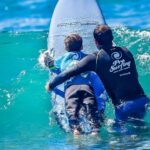
This 3-hour San Agustín surf course is set up for real learning at some of the best waterlines in the south of Gran Canaria, with the instructor running the show from start to finish. The location usually sits at Playa del Inglés or Maspalomas, right by the lighthouse area, and it can shift based on the sea.
Two things I like a lot: you get small-group coaching (kept to about 8–10 people), so you’re not stuck waiting your turn. And the instruction focuses on both board handling and how to move with confidence in the water, with teachers who can work in English and Spanish. That’s a rare combo: friendly guidance plus clear technique.
One thing to consider is that the beach and start time can change with conditions. You’ll usually meet at Faro Maspalomas, but the session may run on another nearby stretch if the surf needs adjusting, and the provider confirms the morning start once they see the sea.
In This Review
- Key takeaways before you go
- Entering the water at Faro Maspalomas (and why that matters)
- The 3-hour format: what you’re really buying
- Small-group lessons (up to 8–10): the attention you want
- Where you’ll surf: Playa del Inglés or Maspalomas by the lighthouse
- Morning timing and sea conditions: plan for a flexible start
- Instructor-led technique: board handling plus better body movement
- The value math: why $58 feels fair for what’s included
- A balanced reality check: what might feel imperfect
- Who this San Agustín surf lesson is best for
- Should you book it?
- FAQ
- Where does the surf lesson usually take place?
- How long is the course?
- Are there transfers included?
- What’s the meeting point?
- How many people are in the group?
- Is the course for beginners?
- What’s included in the price?
- What languages do the instructors speak?
- When does the class start?
- What’s the cancellation policy?
Key takeaways before you go
- Faro Maspalomas meeting point: you gather at the surf school location first, then head out to the water.
- Small groups (up to 8–10): you get attention, not just a quick demo and a hope-and-pray vibe.
- Gear + instructor + insurance included: you’re covered for the activity, and you don’t have to source equipment.
- All levels welcome: the course is adapted so beginners and improving surfers can participate.
- Weather-driven location changes: the team picks the right spot, often Playa del Inglés or Maspalomas by the lighthouse area.
Entering the water at Faro Maspalomas (and why that matters)
The lesson starts with you showing up at the tour meeting point at Faro Maspalomas, where the surf school is based. This matters more than you’d think. When a lesson begins at the right spot, you lose less time figuring out directions and more time actually getting reps.
Once you meet the group, you get your surf equipment right there. Then your instructor takes you to the beach where the course will happen. It’s a straightforward flow, and it keeps the day from turning into a long scavenger hunt.
If you’re staying in the south of the island, there’s also a transfer included to and from your hotel. If you’re not in that zone, you’ll typically go on your own and just meet at the scheduled point. Either way, it keeps the lesson structure simple: meet, gear up, surf.
A few more Gran Canaria tours and experiences worth a look
The 3-hour format: what you’re really buying
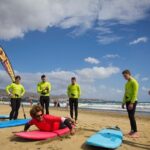
You’re paying for three hours of instructor-led coaching. That’s a strong value window for most first-time surfers because the learning curve is real, but the time is enough to make progress without burning out.
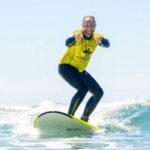
What you’re not buying is a long “hang out at the beach” experience. The course is built to teach you how to handle the board and how to move like you’re supposed to. The goal isn’t just to stand up once. It’s to understand technique and then have fun doing it again and again.
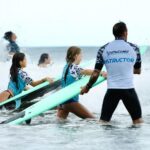
And because the group stays small, your instructor can actually correct your position, your timing, and your movements while you’re in the middle of the learning process. That one detail—hands-on help while you’re trying—is why this kind of class tends to feel productive instead of awkward.
Small-group lessons (up to 8–10): the attention you want
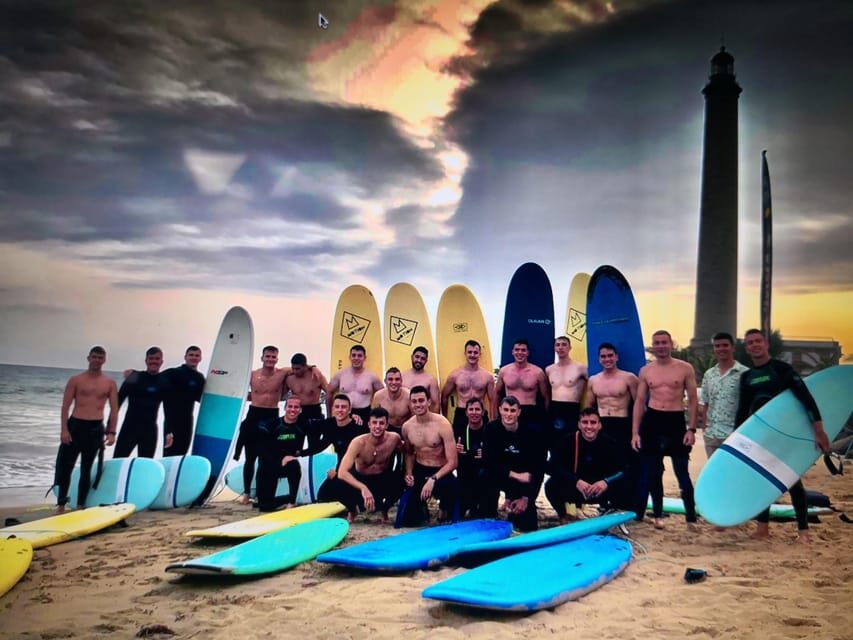
Surfer math is simple: more people means less coaching per person. This course uses small groups limited to about 10 participants, and it’s described as lessons in groups of up to 8—either way, it’s clearly designed so you’re not lost in the crowd.
In practical terms, that means:
- You can ask questions without shouting over the ocean.
- You’re more likely to get quick adjustments when something feels off.
- You spend more time on the board and less time waiting.
One of the best signs is that the instructor is there whenever you need help. On a day when the sea is doing its thing, having someone close by who can explain what’s happening makes a big difference.
Where you’ll surf: Playa del Inglés or Maspalomas by the lighthouse
Most sessions run at Playa del Inglés or the Maspalomas beach area next to the lighthouse. That’s not just a random detail. Those areas tend to be convenient bases for surf operations in the south—easy to reach, with options depending on conditions.
And yes, the exact location can change. The activity provider notes that the session can shift due to weather and sea conditions. This is a big reason the course feels adaptable.
On days when the surf isn’t cooperating in one spot, instructors can adjust the plan and move you to where the waves make more sense. You’re not stuck forcing it at the wrong beach. The priority is surfing rather than suffering.
Morning timing and sea conditions: plan for a flexible start
The course usually starts in the morning, but the exact time depends on the sea conditions. The provider will contact you to confirm the starting time.
I recommend you treat the morning as a window, not a fixed appointment. If you’re building your Gran Canaria plan that day—especially if you’re pairing it with other activities—keep some breathing room.
This is also one of the reasons the experience can work for different experience levels. When the team can choose the right timing and spot, the learning environment is more likely to fit what beginners need and what improving surfers want to practice.




Instructor-led technique: board handling plus better body movement
Surf coaching has two parts: the board skills and the body skills. This course targets both.
You’ll learn:
- How to handle the board before and during attempts to catch waves.
- How to move like a fish, meaning your body position matters, not just your arms and legs flailing.
That’s a helpful way to think about surfing. A lot of beginners try to muscle their way into standing. Technique training shifts that. You start to focus on positioning and timing—then your success rate usually rises quickly.
The instructor also speaks Spanish and English, so you can get explanations in a way that matches your comfort level. Clear communication reduces frustration, especially when you’re learning fast and you’re already a little nervous.
The value math: why $58 feels fair for what’s included
At $58 per person for 3 hours, the price lands in a reasonable range for a guided surf lesson in Gran Canaria—especially because the package includes key basics.
What you get:
- Surf equipment
- An instructor
- Insurance
- Transfer to/from your hotel for guests in the south of the island
That combination matters. Equipment can easily become an extra cost if you show up unprepared. Insurance adds comfort, since this is an active sport with real risk. And if you’re staying in the south, the included transfer can save time and stress.
If you’re not in the south island zone, you may need your own transport to reach the meeting point. In that case, the lesson still looks good, but you should factor in how you’ll get to Faro Maspalomas.
Overall, the value here is in the structure: 3 hours with coaching, limited group size, and no missing pieces like gear sourcing.
A balanced reality check: what might feel imperfect
No surf day is perfect, and this one is honest about that. The course can run at different beaches depending on sea conditions. The start time can shift based on weather and wave behavior.
There’s also one practical wrinkle: hotel pickup is only included for the south island. If you’re outside that area, don’t expect pickup. And if your plan depends on a specific pick-up address, double-check it carefully before the morning.
One more consideration: small waves can happen. When that’s the case, instructors may adapt the location so you still get a worthwhile session. That’s usually what you want, but it does mean you should be ready for the plan to evolve during the day.
Who this San Agustín surf lesson is best for
This course is built for all levels, so it works if you’re:
- A complete beginner who wants direct coaching and small-group attention.
- A returning surfer who wants more structured technique practice.
- Someone who prefers learning with a professional instead of trying to “wing it” on your own.
It’s also a smart fit if you’re staying in Gran Canaria’s south, because the meeting point and the included transfers make the day feel efficient.
If you’re traveling with friends, the small group size makes it easier to share the experience without turning it into a private lesson price.
Should you book it?
I’d book this 3-hour San Agustín surf lesson if you want a straightforward, well-run coaching session with gear, insurance, and instructor support already handled. The small group size is the big selling point, because it gives you the best chance to learn instead of just spectate.
Book it even more confidently if you’re staying in the south of the island and can use the included transfer. And if you’re the type who hates rigid schedules, this one still works—you’ll get a morning confirmation based on the sea, plus the team chooses the right nearby beach when conditions call for it.
If you want a flexible, guided way to get real surf progress in Gran Canaria, this is a solid pick.
FAQ
Where does the surf lesson usually take place?
It’s usually carried out on Playa del Inglés or Maspalomas beach, next to the lighthouse. The exact location can change depending on weather conditions.
How long is the course?
The duration is 3 hours.
Are there transfers included?
Transfer to/from your hotel is included only for guests staying in the south of the island.
What’s the meeting point?
You’ll gather at the tour meeting point at Faro Maspalomas, where the surf school is located.
How many people are in the group?
It’s a small group, limited to up to 10 participants, and described as lessons in small groups of up to 8 so you get attention.
Is the course for beginners?
Yes. The course is adapted for all levels.
What’s included in the price?
Included items are surf equipment, an instructor, and insurance.
What languages do the instructors speak?
The instructor is available in Spanish and English.
When does the class start?
It’s usually in the morning, but the exact starting time depends on sea conditions. The provider contacts you to confirm.
What’s the cancellation policy?
You can cancel up to 24 hours in advance for a full refund.