REVIEW · GRAN CANARIA
Small-Group Surf Lessons in Gran Canaria
Book on Viator →Operated by Surf Canaries · Bookable on Viator
Surf lessons feel easier when the group is tiny.
This 4-hour surf school session in Playa del Inglés keeps things structured for a max of 5 people, so you’re not lost in a crowd. I like that it starts with a clear morning plan, then builds from short drills to real time on the waves, with lessons offered in English.
Two things I really like: the video theory isn’t generic, and it’s designed to fix the basics that stop beginners from getting up. And when you do hit the water, you get hands-on coaching with patient, confidence-building instructors like Marta and Dani. The one real consideration is physical effort: you’ll carry your surfboard to the beach, which is not far, but it does add a bit of extra work.
In This Review
- Key highlights worth planning for
- Playa del Inglés surf lessons in a group of only five
- The 9:30 meet-up, briefing, and video theory that teaches usable basics
- Beach simulation first: a smart way to avoid rushing in the water
- First surf session: how the lesson uses about 50 minutes in the water
- The break that keeps your energy up for the second session
- Second surf session: getting feedback you can actually use
- Photos and free download: the end-of-day payoff
- Price and value: what $72.56 really buys you
- Who this is best for in Gran Canaria
- Practical details you’ll want to know before you go
- Should you book Surf Canaries’ small-group surf lesson?
- FAQ
- How long is the surf lesson in Playa del Inglés?
- What time does the activity start?
- What’s the group size?
- Where do we meet?
- Is this lesson for beginners?
- Is the lesson offered in English?
- What’s included in the price?
- How much time do we spend in the water?
- Are the photos included and can I download them?
- What if the weather is bad?
- Can I cancel for a full refund?
Key highlights worth planning for
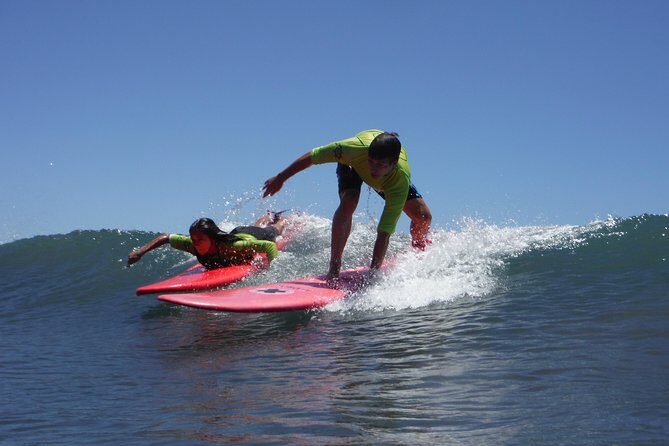
- Small groups of up to 5 mean more direct coaching and faster feedback
- Short, focused theory plus a video format built from years of hands-on teaching
- Controlled pacing: beach simulation first, then two surf sessions with a real break
- Includes boards, snacks, bottled water, and souvenir photos so you don’t get nickel-and-dimed
- Free photo download with no upselling at the end
- Beginner-friendly but not boring for people who’ve surfed before
Playa del Inglés surf lessons in a group of only five
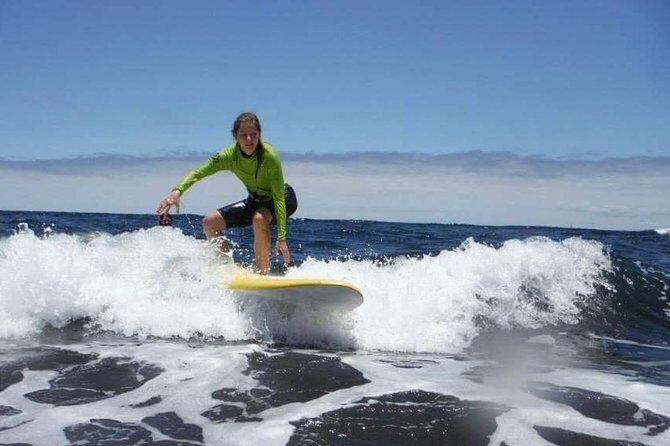
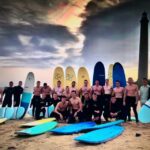
Playa del Inglés is busy in a way only a major beach resort can be. That’s exactly why I like this style of lesson: you still get the classic surf experience, but your time stays organized and calm instead of chaotic. You’ll meet at Surf Canaries around 9:30am (timing can shift based on the day’s surf conditions), then you’re underway with a plan.
The meeting point is on Av. Alf Provisionales… Local 1H in Maspalomas, and it’s near public transportation. If you’re staying nearby, this is the kind of activity that doesn’t demand a car or complicated schedules. Also, since it’s typically booked about 10 days in advance, it’s smart to lock in your spot when you know your dates.
This is listed as a small-group activity with a maximum of 5 travelers. That number matters. With fewer people, instructors can watch your takeoff, your stance, and your timing without guessing.
Other Gran Canaria tours we've reviewed in Gran Canaria


The 9:30 meet-up, briefing, and video theory that teaches usable basics
The session starts with a relaxed but focused morning briefing. Then you move into a short classroom setup for practical fundamentals. What makes this section stand out is that the theory isn’t treated like homework you’ll forget the moment you step outside. It’s built from over 10 years of hands-on teaching, and it’s meant to work for both first-timers and returning surfers.
You’ll do video theory in a way that’s designed to translate fast into action. Instead of vague tips, it centers on the fundamentals that actually help you get up on the board. If you’ve tried surfing before and felt like you knew “the idea” but couldn’t make your body do it, this format is exactly the kind that can help you connect the dots.
The lesson also includes golden rules of surfing. You’re not memorizing a textbook. You’re learning a few simple cues that you can try instantly once you’re standing on the sand with your board.
If you’re worried about boredom for beginners, you’re still in good shape here. The structure is built to be relevant whether you’ve never surfed or you’ve already caught some waves.
Beach simulation first: a smart way to avoid rushing in the water
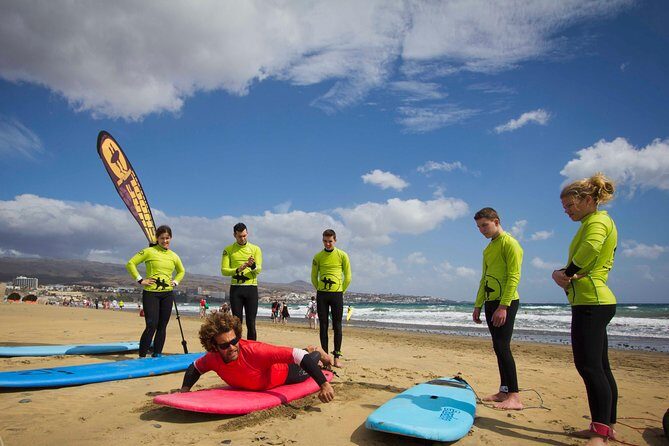
Before you rush into the ocean, you do a short beach simulation. This is a quiet win for your confidence. It helps you practice the movements and positioning in a low-pressure setting where falling isn’t the whole lesson.
This phase usually makes the transition smoother, especially for first-time surfers. You start building muscle memory and understanding what “ready” looks like. And because it happens before your first real wave attempt, you spend less time flailing and more time learning.
The lesson stays paced. You won’t be thrown into long water time without breakpoints. That means you’re learning in steps, not in one big trial-by-fate push.
Also, you’ll carry your surfboard from the school to the beach. It’s not a huge hike, but it’s real effort. I’d consider that a positive if you want to feel like you’re doing more than just sitting on a lounge chair for four hours.
First surf session: how the lesson uses about 50 minutes in the water
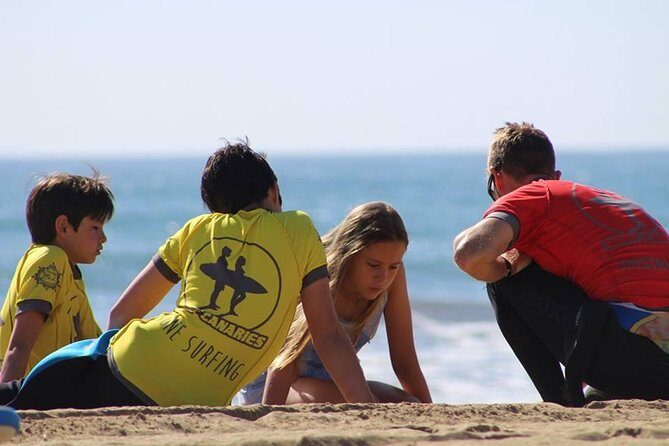
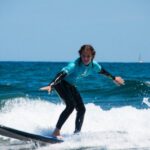
After the simulation, it’s time to hit the water for the first practical session. The plan calls for about 50 minutes in the ocean, which is a solid chunk of time for learning. It’s long enough for repetition, but not so long that everyone ends the day exhausted and discouraged.
In that first session, the point is not perfection. It’s getting your stance and timing under your body with direct instruction. With a group size capped at five, you’re more likely to get corrections that fit what you’re actually doing, not what you’re doing in a general sense.
This is the part where small details matter: where you place your feet, how you handle the board, and when you commit to standing. If you’ve ever watched a surfer and thought it looks easy, then tried it and suddenly had questions, this is where the coaching helps you move from theory to physical execution.
When you’re done with the first water block, you get a built-in pause rather than immediately going again.
The break that keeps your energy up for the second session
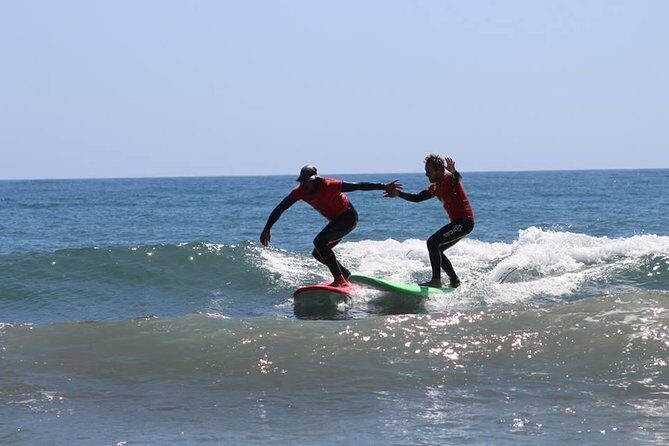
Right after the first surf session, there’s a 20-minute break. This matters more than you might think. Surf days can be tiring, and your performance improves when you’re not dragging yourself through the next set.
During this break, you can rest and recharge. You also get complimentary fruit along with the other included refreshment setup. The snacks and bottled waters are part of the value here because they keep the day comfortable, especially if you’re traveling and don’t want to stop for food mid-lesson.
I like that the lesson treats the break as a real tool for learning. You return with clearer focus, and your instructor can still see what you’re improving.
Then you head back out for the second session.
A few more Gran Canaria tours and experiences worth a look
Second surf session: getting feedback you can actually use
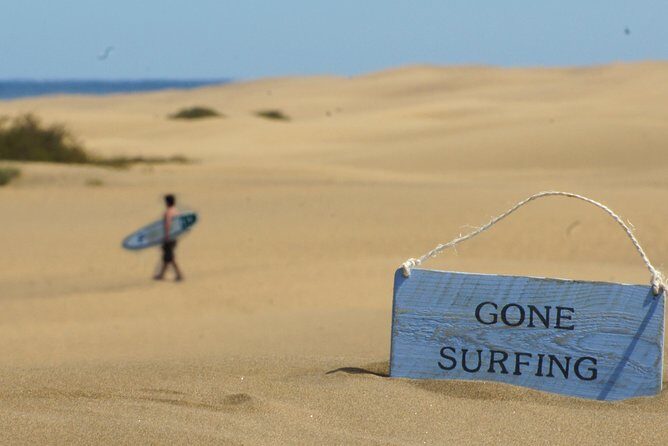
Your second surf session is where things often click. By now, you’ve practiced the basics on sand, gotten a first taste in the water, and used the break to reset. That rhythm helps you apply what you were told instead of repeating mistakes just because you’re tired.
Because the group stays small, you’re not stuck waiting for attention. You’re more likely to get quick, specific feedback while the lesson still has momentum. That’s the big difference between a hands-on coaching day and a “stand around and hope for waves” situation.
This is also where people with a bit of experience can benefit. Even if you’ve surfed before, you can still refine the fundamentals that improve takeoff and balance. The structure is built to avoid feeling like you’re getting dragged through only beginner basics.
By the time you wrap up, you should feel like you progressed—even if progress looks like catching more consistent attempts, not suddenly becoming the next local legend.
Photos and free download: the end-of-day payoff
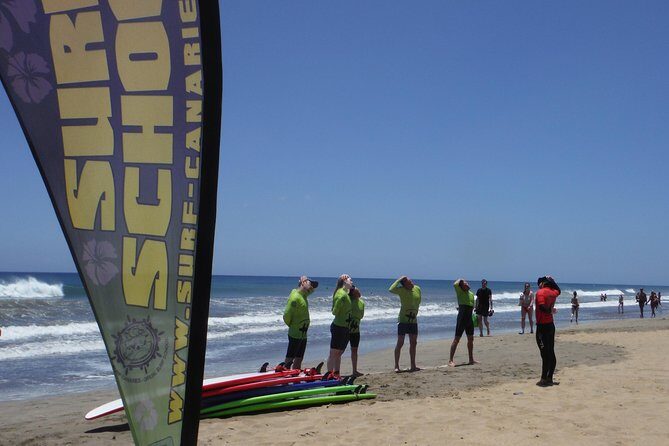
You finish back at Surf Canaries with a relaxed photo viewing. This part is included, and it’s handled in a straightforward way. You get souvenir photos and can download them for free, with no upselling or surprise add-ons.
That matters if you’re the type who likes proof after you take on a new activity. Surf photos are often hit-or-miss in a DIY situation, and here the format is built around capturing the moments that count. If you’re traveling with friends or family, it’s also a nice way to share the day without scrambling later.
The overall tone at the end is calm. You’re not rushed into a retail pitch. It’s just a way to look back at what you did and how you looked doing it.
Price and value: what $72.56 really buys you
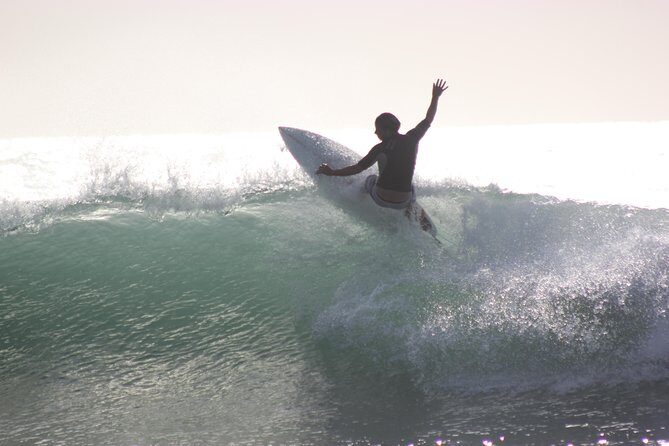
At $72.56 per person for roughly 4 hours, this sits in a “serious but not crazy” range for surf instruction. The real question is what’s included, and here you get a lot inside the price.
You receive equipment/boards, snacks, bottled water, and the souvenir photos. For a beginner, that’s huge. Surf lessons can get expensive fast when you add board rental, water, and food stops. Bundling those items into one price keeps the day simpler and easier to manage.
You also get the learning value of small-group coaching. With a maximum of five people, you’re paying for instruction time that doesn’t get diluted. That’s often where the “value” shows up, because you spend more of the session being coached and less time waiting.
If you’re trying to choose between a crowded group lesson and a smaller one, I’d pick small. In this case, the small-group setup is baked into the experience from the start.
Who this is best for in Gran Canaria
This lesson is a strong match for first-timers, and it also works for surfers with experience who want a refresher on fundamentals. The structure is built to take you from theory to sand drills to two actual time blocks in the ocean.
You should have moderate physical fitness. That’s not a huge gym requirement, but you should be comfortable doing basic exertion like carrying your board and being in the water. One of the most common practical notes is that board-carrying adds a bit of workout, even if the walk isn’t long.
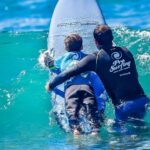
This can also work for families. I’ve seen setups like this where teens and kids enjoy the experience when instructors keep communication friendly and pacing steady. In this case, there are examples of younger participants having a great time with supportive coaching and clear interaction.
If you hate any kind of physical effort and want a purely sit-and-watch experience, this isn’t that. Surfing is hands-on by nature. The good news is the day’s structure supports you.
Practical details you’ll want to know before you go
Timing matters because surf conditions drive the exact flow. The activity typically starts around 9:30am, but the day’s plan can adjust depending on the waves and weather. Build your morning around arriving on time for the briefing.
This is an activity that requires good weather, so plan flexibility. If conditions aren’t safe or usable, you’ll be offered a different date or a full refund.
You’ll also get a mobile ticket, and confirmation happens at booking. The lesson is offered in English, which is a big help if you’re not comfortable with Spanish-only instruction.
Most importantly, don’t overthink it. The lesson is designed to move step-by-step. You’re not expected to magically know how to surf the moment you pick up a board.
Should you book Surf Canaries’ small-group surf lesson?
Book it if you want a surf day that feels organized, beginner-friendly, and instruction-heavy. You get small-group attention, structured theory, a sand stage before the ocean, and two practical sessions with a real break. Add included gear, snacks, bottled water, and free photo downloads, and the overall package feels practical for your time.
Skip it or consider your expectations if you’re very sensitive to physical effort. The board-carry portion is part of the experience, and you’ll be in and out of the water through the session. Also, because it depends on weather, you’ll want to keep your schedule flexible.
If you’re in Gran Canaria and you want your money to go toward coaching instead of logistics, this is one of the cleaner choices on the beach.
FAQ
How long is the surf lesson in Playa del Inglés?
It lasts about 4 hours (timing can vary based on surf conditions).
What time does the activity start?
You typically meet around 9:30am.
What’s the group size?
The lesson has a maximum of 5 travelers, which keeps the coaching focused.
Where do we meet?
The meeting point is Surf Canaries at Av. Alf Provisionales, Anexo II, Local 1H, 35100 Maspalomas, Las Palmas, Spain.
Is this lesson for beginners?
Yes. It’s ideal for both first-timers and people with surfing experience.
Is the lesson offered in English?
Yes, it’s offered in English.
What’s included in the price?
The price includes equipment/boards, snacks, bottled water, and souvenir photos.
How much time do we spend in the water?
You do about 50 minutes in the water, then a 20-minute break, followed by a second surf session.
Are the photos included and can I download them?
Yes. Photos are included, and they are free to download after the photo viewing.
What if the weather is bad?
The experience requires good weather. If it’s canceled due to poor weather, you’ll be offered a different date or a full refund.
Can I cancel for a full refund?
Yes. You can cancel up to 24 hours in advance for a full refund. If you cancel less than 24 hours before, the amount you paid is not refunded.