REVIEW · GRAN CANARIA
Playa del Inglés surf lessons
Book on GetYourGuide →Operated by Canary Wave Surf School · Bookable on GetYourGuide
First-time surf can feel random. This one feels coached. You get a 3-hour session on the best south Gran Canaria beaches, with a pro teaching you how to handle the board and how to move like a fish. I especially like the small groups (up to 8) and the hands-on, patient instruction I’ve seen from coaches such as Rayco and Doramas.
One thing to plan for: the exact spot and morning start can change with weather and sea conditions, so you’ll want to stay flexible and listen for the provider’s message.
Key things I’d book this for
- Up to 8 people means you’re not just watching other surfers
- Beginner to all levels instruction, not one-speed lessons
- Maspalomas Lighthouse area meeting point makes it easy to find once you’re there
- Gear included (board and wetsuit setup time is part of the session)
- English, Italian, Spanish, French so you can actually learn without guessing
In This Review
- Playa del Inglés Surf Lessons: Why This One Fits Real First-Timers
- Where You Meet: Oasis Shopping Center by Maspalomas Beach
- How the 3 Hours Actually Feel: From Gear Prep to Waves
- The Sand Part: Basics You Can Use Immediately
- The Water Session: Technique + Time on the Board
- Coaching Styles You’ll Actually Notice
- Price and Value: What $58 Gets You
- Logistics That Matter: Morning Start, Weather Shifts, and Your Headspace
- Who This Is Best For (And Who Might Want Something Different)
- What You’ll Walk Away With: More Than Just a Photo
- Should You Book This Playa del Inglés Surf Lesson?
- FAQ
- How long is the surfing course?
- Where do I meet the surf school?
- Does the price include transfers?
- What’s included in the lesson?
- Do I need to bring water?
- Does the location ever change?
Playa del Inglés Surf Lessons: Why This One Fits Real First-Timers
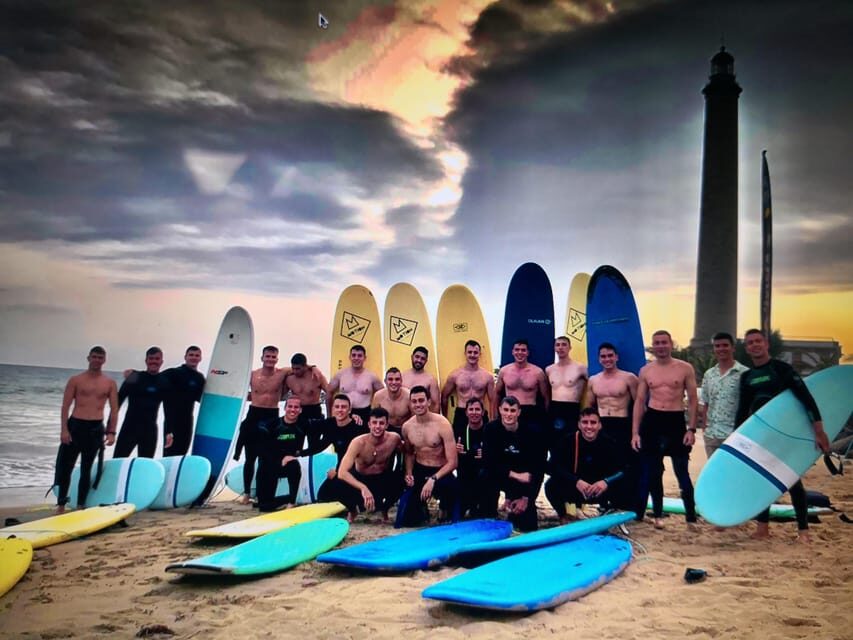
Surf lessons work best when they keep things simple and focused: stand up, balance, paddle efficiently, and read the wave zone. This course aims right at that. You’re on one of the well-known south-coast beaches around Maspalomas/Playa del Inglés, where the coaching can be practical because you can spend time working the same fundamentals rather than running around for different viewpoints.
I like that the teaching is structured but not stiff. You’re not just thrown into the water and told good luck. Coaches focus on what you need next, and the small group format helps the instructor keep an eye on your form. That matters when you’re learning something as physical as surfing, where tiny changes in stance or timing can turn a wipeout into a real ride.
Where You Meet: Oasis Shopping Center by Maspalomas Beach
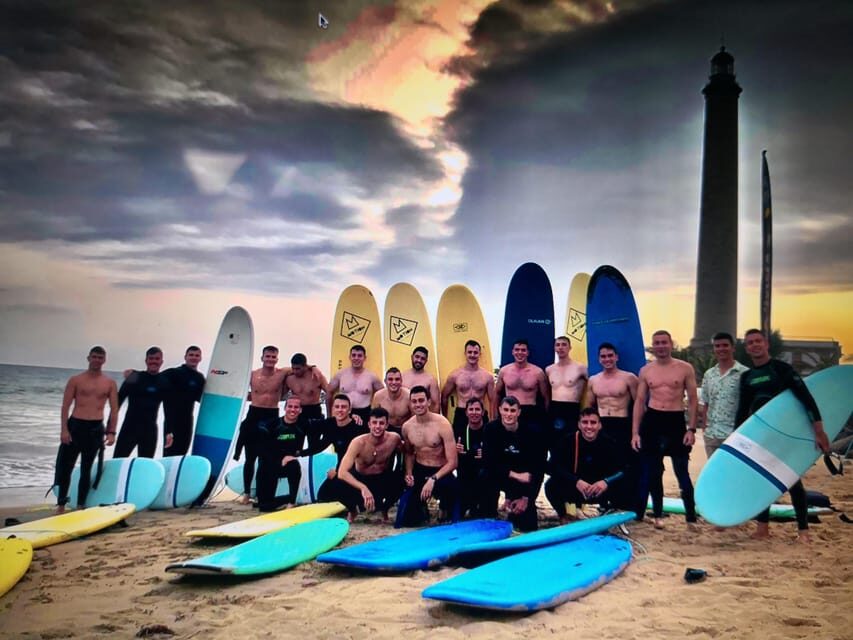
You’ll meet at the Canary Wave Surf School By Nixon, in the Oasis Shopping Center area at Maspalomas beach, behind the Red Cross lifeguard tower. This is in the general lighthouse zone (the Faro Maspalomas area), which is handy because it’s a recognizable landmark on the south coast.
If you’re staying in the south of the island, you may also have a transfer included with your reservation. That can save time and stress in a place where driving and parking can eat your schedule. Even with a car, plan extra minutes. One helpful real-world tip from people who’ve done this: parking near the area isn’t always easy, so arriving early gives you room to find a spot without rushing.
A few more Gran Canaria tours and experiences worth a look
How the 3 Hours Actually Feel: From Gear Prep to Waves
A 3-hour surf course sounds long on paper and fast in the water. Here’s the rhythm you should expect, based on how this style of lesson is run and what’s included.
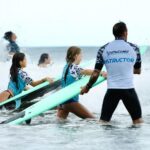
First comes the meeting with the instructors and sorting out equipment. Your board is provided, and you’ll have time for setup (including suit and gear allocation). Then you head to the beach spot where conditions are best. The course is typically organized around a block of instruction that totals about 2.5 hours for the main class time, with extra time at the start and end for getting ready and returning.
After you get the basics, you don’t just do one short attempt and call it done. The goal is repeated tries with coaching feedback. That’s where the “small group” part pays off. You get more turns at the wave and more chances to correct what’s going wrong.
The Sand Part: Basics You Can Use Immediately
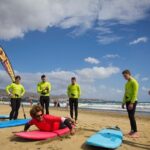
Before you paddle out, you’ll get teaching on the beach. This is not the kind of sand talk that lasts forever. It’s usually short, clear, and practical. You’ll learn the core movements and positioning so you can stop guessing once you’re in the lineup.
Here’s what the sand coaching is likely to help with during your first session:
- How to position yourself on the board before you try to stand
- How to move so your body tracks the board instead of fighting it
- How to paddle and time your attempts relative to the wave
You’ll also get a quick explanation of how the instructor wants you to respond when something changes. In surf, conditions shift. A lesson that teaches you the basics of technique (rather than chasing one perfect set of waves) helps you adapt.
The Water Session: Technique + Time on the Board
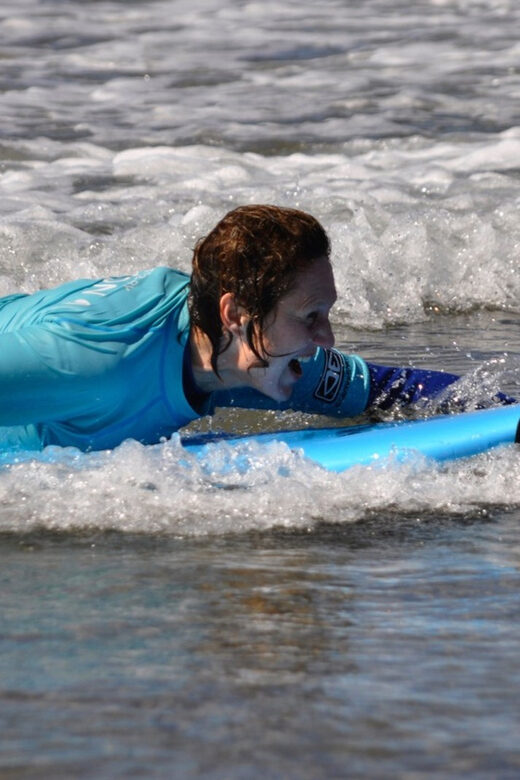
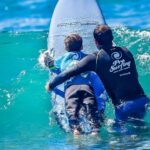
Once you’re in the water, this is where you find out if you’ve got the basics right. The coaches stay engaged and offer help when you need it, which makes a huge difference if you’re learning for the first time.
You’ll likely spend time practicing:
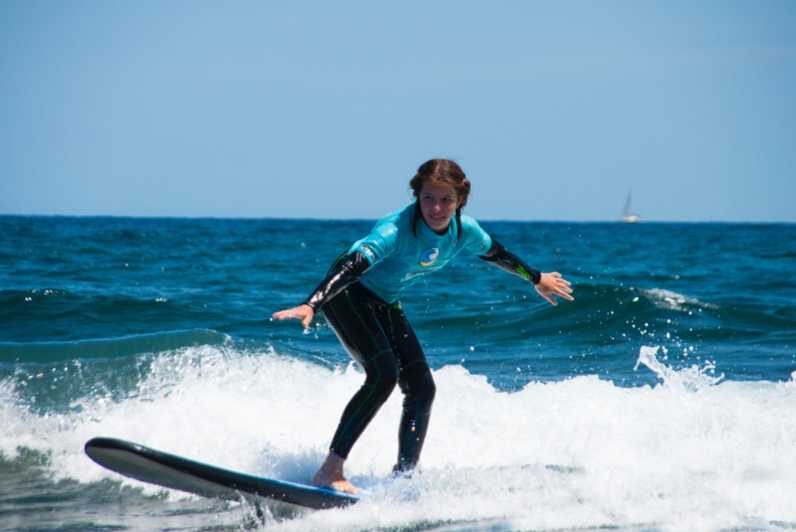
- Starting and popping up (the hardest part for most beginners)
- Maintaining balance in motion
- Trying again after mistakes instead of getting discouraged
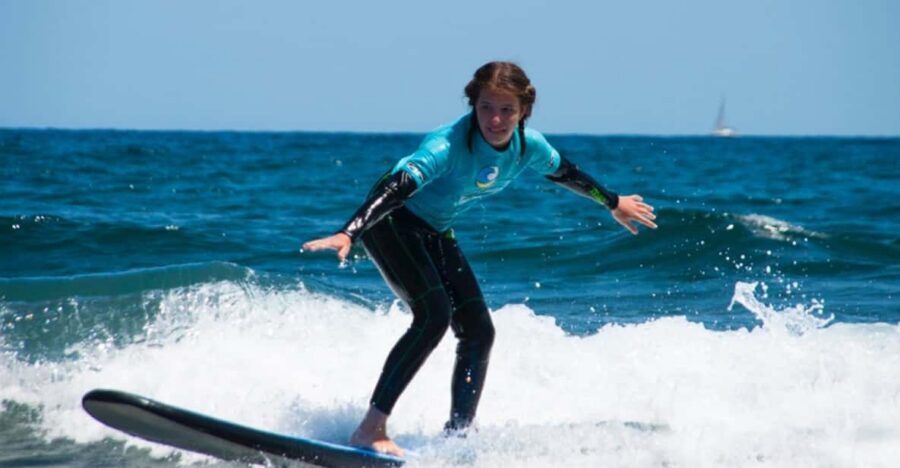
The lesson is adapted for different ability levels, so it doesn’t feel like everyone is doing the same thing at the same pace. In smaller groups, the instructor can adjust what you focus on. People have repeatedly pointed out that coaches stayed patient and enthusiastic, especially when someone in the group had little or no experience.
Also, the beach location may shift between Playa del Inglés and Maspalomas depending on weather conditions. That’s not a flaw. It’s smart surf logistics. The provider typically confirms the starting time and course location, usually with a morning schedule that depends on the sea.
Coaching Styles You’ll Actually Notice
A big reason this course gets strong ratings is not just the location or the equipment. It’s the human factor: coaches who explain quickly, then watch what you do.
Names that show up in real experiences include Rayco, Doramas, Toramas, and Charlie. While you can’t count on a specific coach every time, the recurring pattern is consistent:
- They explain things fast
- They’re patient when you’re struggling
- They keep you safe and moving
If you’re nervous about trying surf, this is one of those activities where a supportive instructor changes the whole vibe. You’ll still wipe out sometimes. Surf is surf. But you’ll wipe out with a plan.





Price and Value: What $58 Gets You
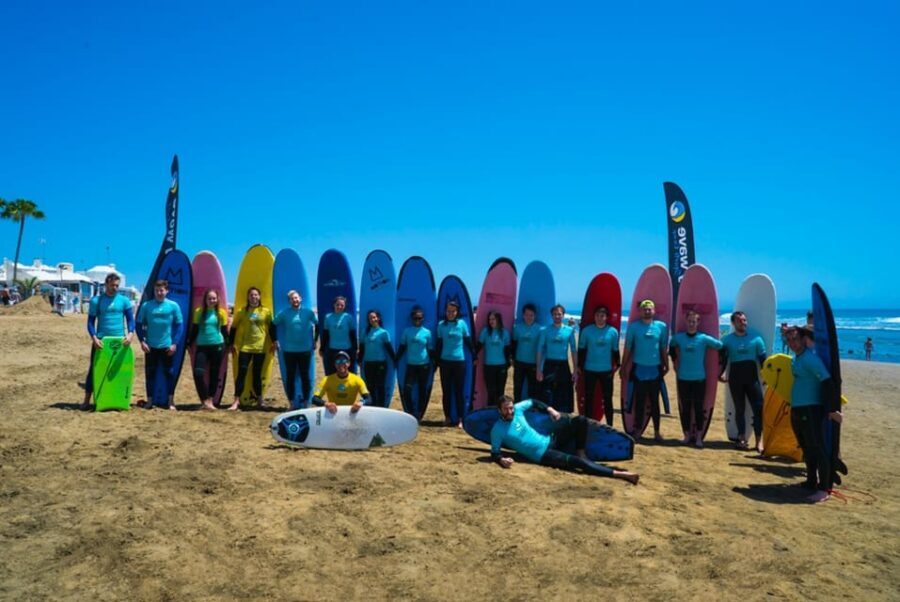
At $58 per person for a 3-hour lesson, this is positioned as solid value because you’re paying for more than “someone to watch you.”
What’s included:
- Surf equipment
- Instructor coaching
- Transfer to/from your hotel in the south of the island (depending on your reservation option)
Not included:
- Water
That last point sounds small, but bring it seriously. Once you’re in salt air and moving around, dehydration sneaks up. Buy or pack water before you start.
Value-wise, the real question is whether you’re getting enough time on the board to feel progress. The small group size helps here. If you’re paying for a group experience, you want a group size that doesn’t turn into stand-in-line surfing. Up to 8 participants is a strong limit for keeping coaching personal.
Logistics That Matter: Morning Start, Weather Shifts, and Your Headspace
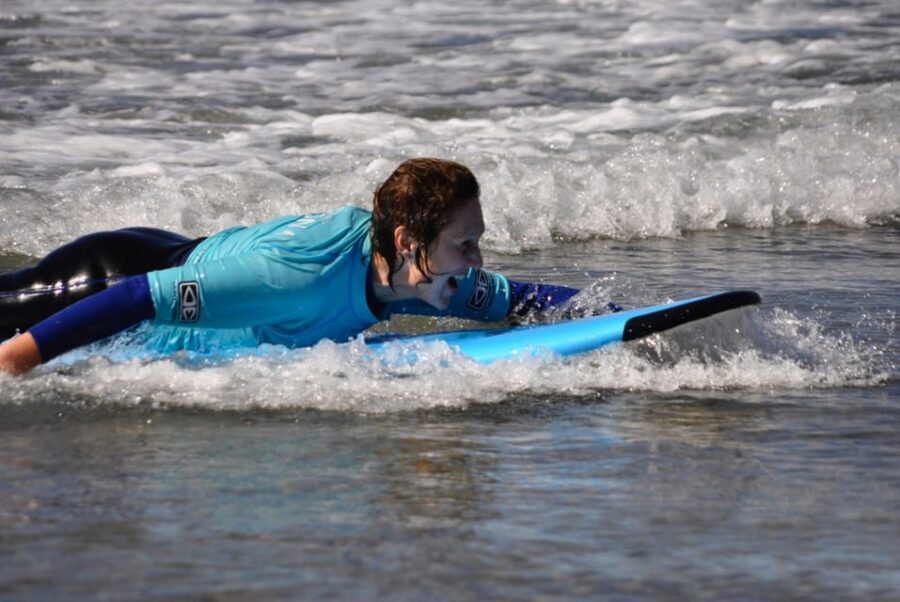
This lesson typically runs in the morning, but the exact start time depends on sea conditions. The provider contacts you to confirm the starting time. You should plan for a bit of waiting and flexibility, especially if the location changes between Playa del Inglés and Maspalomas.
What to do with that information:
- Don’t overbook right after your lesson. You’ll likely need time to shower, change, and reset.
- Arrive a little early so you’re not stressed about parking or finding the surf school.
- Bring water even though it’s not included.
This kind of uncertainty is normal in surf. The difference is how smoothly it’s handled. Here, the overall setup is built to adapt without derailing your lesson.
Who This Is Best For (And Who Might Want Something Different)
This course is built to work for different skill levels, including complete beginners. It also fits families and kids, since several people have done it with children around 10–12 and reported that the session helped them stand and gain confidence.
You’ll likely enjoy it most if:
- You want coached technique, not just a ride
- You’re traveling with a partner or friends and want a small-group vibe
- You care about learning basics you can use in future surf sessions
You might consider a different approach if:
- You’re the kind of surfer who already knows wave selection and just wants more time in the water
- You hate flexibility with start times and spot changes based on weather
For most people in the “first time or first trip to surf” category, this is a strong match.
What You’ll Walk Away With: More Than Just a Photo
Even if you don’t stand on every try, you’ll still leave with something useful. A good surf lesson teaches patterns, not luck.
Based on the way this course is described and how it’s delivered, you should come away with:
- A clearer body position on the board and better balance instincts
- A sense of wave timing and when to attempt the pop-up
- Confidence from getting coached corrections, not guessing your way through
And that’s the real value in the small-group format. When someone checks your technique and helps you adjust right away, progress feels faster.
Should You Book This Playa del Inglés Surf Lesson?
I’d book it if you want a well-run first surf experience in the south of Gran Canaria, with included gear, an instructor, and a group size that keeps you from feeling ignored. The $58 price makes more sense when you look at what’s included (equipment, instructor, and possibly transfer) and the lesson length that gives you real practice time.
Book it if you’re okay with a morning schedule that can shift and a course location that may switch between Playa del Inglés and Maspalomas based on sea conditions. Surf is weather-led, and this setup is designed for that reality.
If you want more control over exact wave spots or you’re already an advanced surfer chasing specific performance goals, you might look for a more specialized session. But for most people who want their first true attempt to feel guided, safe, and fun, this is a very good call.
FAQ
How long is the surfing course?
The lesson runs for 3 hours.
Where do I meet the surf school?
Meet at Canary Wave Surf School By Nixon in the Oasis Shopping Center at Maspalomas beach, behind the Red Cross lifeguard tower.
Does the price include transfers?
Transfer to and from your hotel is included only for guests staying in the south of the island, based on the reservation option.
What’s included in the lesson?
Surf equipment is included, along with an instructor.
Do I need to bring water?
Water is not included, so bring some with you.
Does the location ever change?
Yes. The activity is usually carried out on Playa del Inglés or Maspalomas beach next to the lighthouse, and it can change depending on weather conditions.