REVIEW · GRAN CANARIA
Gran Canaria: Guided Via Ferrata Excursion
Book on GetYourGuide →Operated by Volaoo D-80 · Bookable on GetYourGuide
That first clip to the safety line changes everything. This Gran Canaria via ferrata tour mixes vertical movement with classic “I can’t believe I did that” moments like a suspension bridge and a swing inside a cave. You also get hiking time, plus a guide who talks about what you’re seeing as you go.
I especially like how the guides run this with a serious safety-first mindset while still making it fun. I also like the practical extras that keep you comfortable during the 4-hour outing: water and a snack, plus a professional photographic report. One thing to consider: it’s not a sit-and-smile activity. You need decent fitness and you should expect some mentally intense sections even if you’re a beginner.
If you’re the type who wants to see Gran Canaria from the cliffs instead of only from a beach chair, this is a strong match. It’s capped at a small group size (up to 8), and guides work with different comfort levels by steering you onto options that feel right for you.
In This Review
- Key points worth knowing before you go
- Entering the route: Parking Actividad YUKAN and your first safety check
- The climb approach: why that walk up is part of the experience
- How the via ferrata system works when you’re a first-timer
- Chain steps and the mental challenge: what feels hard and what doesn’t
- Monkey bridge and the suspension bridge moment
- The cave swing: the strange, fun finale you’ll talk about later
- Learning Gran Canaria above the cliffs: wildlife, plants, and place stories
- Breaks, views, and how the 4-hour timing really feels
- Photos included: why the report is more valuable than you think
- Price and value: is $82 worth it for a 4-hour vertical adventure?
- Who should book this and who should skip it
- Getting the most out of it: simple tips that help immediately
- Should you book Gran Canaria’s Guided Via Ferrata Excursion?
- FAQ
- Do I need previous climbing experience?
- How long is the Gran Canaria via ferrata excursion?
- What does the price include?
- Where do I meet the guide?
- What languages are the guides?
- What should I bring?
- Is it suitable for children?
- What fitness or health limits apply?
- Can I cancel for a full refund?
Key points worth knowing before you go
- Small-group coaching (up to 8): you get attention, not crowd noise
- Beginner-friendly setup: no previous climbing experience is required
- Big “wow” crossings: suspension bridge plus a cave swing
- You’ll earn the views: you combine the climbing with hiking and photo stops
- Professional photos included: you get a photographic report after the activity
- Safety gear and insurance handled: all materials are included, plus accident coverage
Entering the route: Parking Actividad YUKAN and your first safety check
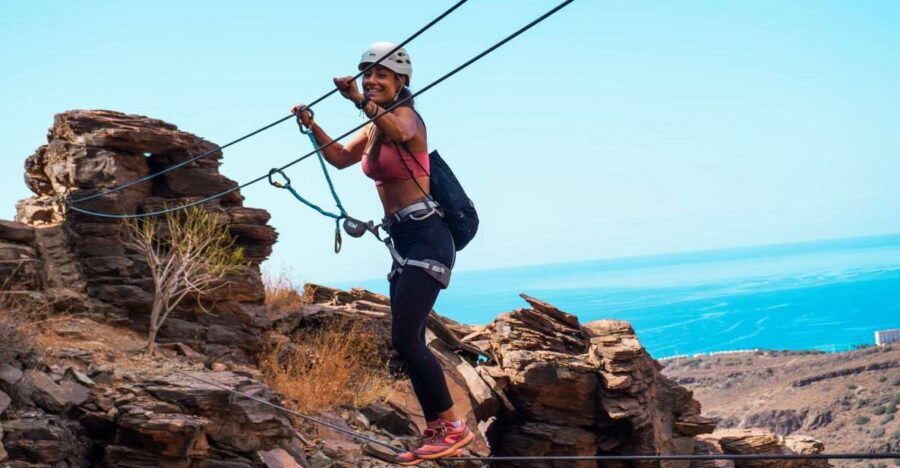
You start at Parking actividad YUKAN, and if the area looks a little empty at first, don’t panic. The key is to find the meeting spot and then follow the group when the guides arrive, because the start feels more like “get your bearings fast” than “tourist welcome desk.”
Once everyone’s together, expect a structured safety briefing before you gear up and start moving. This matters more than people think. Via ferrata isn’t rock climbing where you improvise; it’s a guided system of metal aids and your harness-and-lanyard connection. The guides treat the briefing as part of the adventure, not a boring formality.
Your guide group includes English, Spanish, and Italian support, and you’ll often hear local context as you go. In the experience I’m reviewing, guides like José, Jorge, Juan, Javier, and Dani stand out for explaining what you’re doing in plain language, then checking that you understand before you commit to the next section.
Other Gran Canaria tours we've reviewed in Gran Canaria
The climb approach: why that walk up is part of the experience
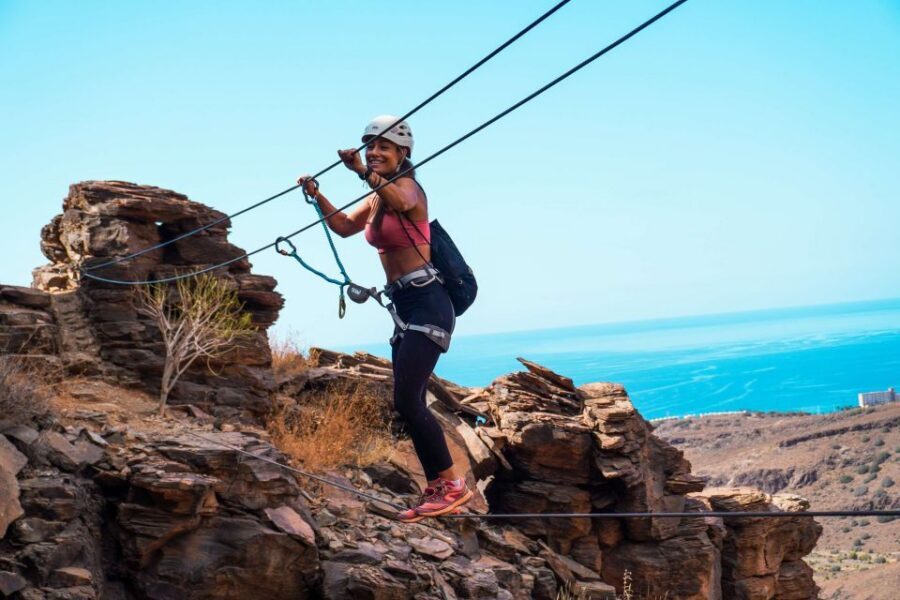
Before you hit the via ferrata, there’s hiking involved, and that “approach” isn’t wasted time. Expect a walk that can feel like about 25 minutes each way on many runs, long enough to warm up your legs and get your mind into outdoor mode. You’ll also get a viewpoint stop with scenic views and some free time for photos.
This part is also where you’ll likely start to notice why Gran Canaria’s cliffs feel different from a simple coastal walk. You’re moving through terrain where the island looks sculpted, and the air can feel sharper once you climb above the busy tourist strip.
The guide usually uses this time to set expectations: what will be steady, what will be mentally demanding, and how you’ll move from one metal feature to the next. If you’re nervous at the start, this is often where confidence starts building.
How the via ferrata system works when you’re a first-timer
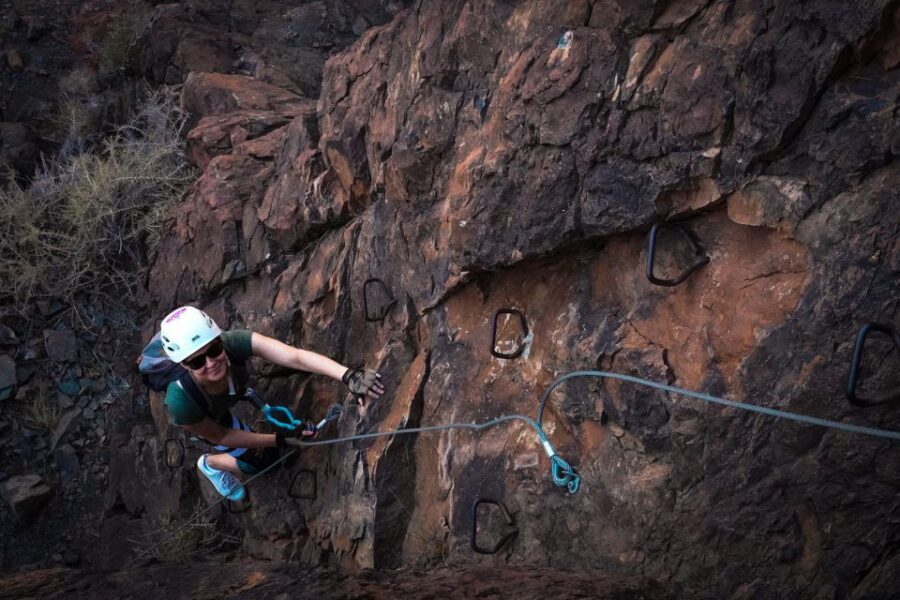
The heart of the day is the via ferrata itself. You’ll climb along routes that combine vertical steps with shorter horizontal stretches, using fixed elements that are installed to make the route safer and more learnable. Even if you’ve never done this before, the tour is designed for first-timers because the key skills are taught on the spot.
You’ll be using the proper safety materials included with the activity. That’s your lanyard and harness connection to the route’s fixed line, turning a tricky “handholds only” situation into something more controlled. The guides constantly monitor technique—hand placement, foot placement, and spacing—so you’re not just following metal. You’re learning the movement pattern.
One of my favorite parts of this setup is the option to choose easier lines when needed. Many guides on this tour keep the group moving while offering route choices so you’re not stuck suffering through a section that doesn’t match your comfort level. If you want the adrenaline without the panic, this flexibility makes a huge difference.
Chain steps and the mental challenge: what feels hard and what doesn’t
Via ferrata always has a mental layer. Your arms might burn a bit, but it’s often the “am I safe right now” feeling that hits first. In this experience, that mental piece is handled well because guides stay calm, patient, and encouraging.
People describe parts of the route as challenging, and upper-body strength helps. That said, “challenging” here doesn’t automatically mean “you must be super fit.” It means you’ll work—grip effort, balance, and controlled movement—especially when the route tilts more steeply.
In the climbs described for this tour, the via ferrata can reach around 300 meters high, with sections that feel more intense than casual hiking. Your job as a beginner is not to become a technical climber. Your job is to follow the guide’s cues, stay connected, and move deliberately.
Monkey bridge and the suspension bridge moment
If you like moments that turn your stomach into a grin, you’ll probably remember the bridges. Reviews for this tour repeatedly highlight a monkey bridge (a wobbly, narrow crossing style) as a fun challenge, plus the suspension bridge as a standout “wow” segment.
Why do these crossings matter? Because they force you to use your body the way you would on a real climbing problem: focus on one step at a time, keep your breathing steady, and trust the system you’re attached to. If you’ve ever felt shaky on a high walkway, this is the place where the guide’s coaching becomes the difference between dread and enjoyment.
Also, suspension bridges create a natural photo moment. Even if you don’t love heights, you’ll likely stop mid-crossing to look out and realize you’re seeing Gran Canaria from a vantage point most people never reach. The views are part of the payoff, not just scenery.
Other guided tours in Gran Canaria


The cave swing: the strange, fun finale you’ll talk about later
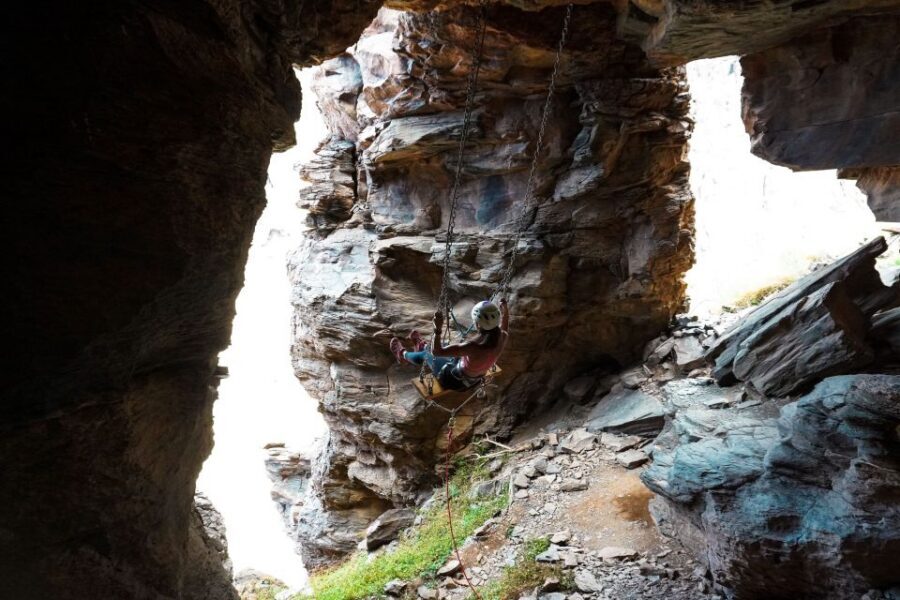
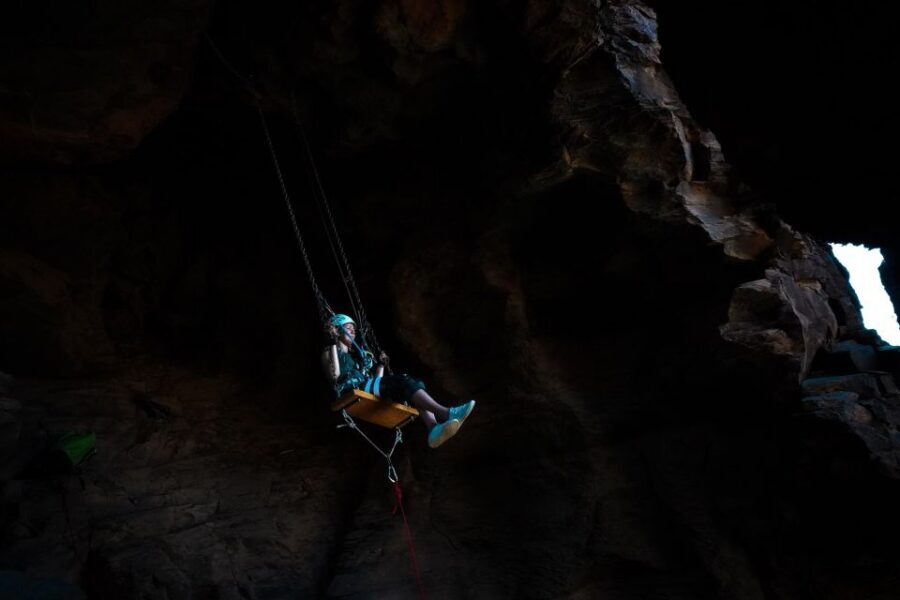
The highlight list calls out a swing hidden inside of a cave, and this is exactly the kind of twist that makes the tour feel more than one activity stitched together. It’s not just vertical movement; it’s playful momentum in a dramatic setting.
How should you approach it? Think of it as a reward after you’ve built focus and confidence on the climbing sections. If you’re doing this as a bucket-list activity, the swing is the moment your brain finally goes quiet and lets you enjoy what you accomplished.
A few people also mention extras such as a zipline, but the main “must” for your planning is the cave swing and the suspension crossing. If your route includes more, that’s a bonus. If it doesn’t, you’re still guaranteed the signature “vertical adventure with a weird grin factor” ending.
Learning Gran Canaria above the cliffs: wildlife, plants, and place stories
This isn’t only physical. One reason the guides score so highly is that they connect the climb to the island itself. In the experiences I reviewed, guides like José and Jorge explain local wildlife and plants as you move through the area, then add history and context about Gran Canaria.
You don’t have to be a nature nerd to appreciate this. It simply makes the day feel fuller. Instead of “I climbed metal stairs,” you leave thinking about why these cliffside ecosystems exist and how the island’s geography shaped daily life.
This kind of guided storytelling also helps during tougher sections. When your legs or arms get tired, hearing a guide talk you through what you’re seeing can keep your attention in the right place.
Breaks, views, and how the 4-hour timing really feels
On paper, it’s 4 hours total. In practice, it doesn’t feel like a rushed factory tour because you get planned pauses. The flow includes a viewpoint break with a photo stop and free time, plus the safety briefing at the start and a return to the meeting area at the end.
These breaks matter for two reasons:
1) You can reset your grip and legs.
2) You can take in the views without feeling like the next clip-in moment is instantly coming.
You’ll also be supplied with water and a snack, which keeps the day from turning into “adventure plus hangry.” It’s a small detail, but it changes how you experience the last part of the route.
Photos included: why the report is more valuable than you think
One of the most practical perks is the professional photographic report. Guides also take photos and videos during the activity, and many people mention they receive them quickly after the tour.
That matters because via ferrata has a strange loop: you’re focused on the next step while also wanting proof you did it. A guide who captures the key moments means you get both: the memory of the experience and visuals you can actually show.
It also helps beginners. When you’re nervous, you don’t always remember what you did right or how you handled a section. Later photos can make the day feel less blurry and more like a true accomplishment.
Price and value: is $82 worth it for a 4-hour vertical adventure?
At $82 per person for about 4 hours, the value here comes from what’s included—not just that you get a guide.
You’re paying for:
- The specific equipment/materials for the activity
- Professional guides with on-route safety management
- Civil liability and accident insurance in force
- A collective first aid kit
- Individual water and snack
- A professional photographic report
When you total that up, $82 starts to make sense as “a complete package,” not “pay for someone to point you at a wall.” If you’re traveling without climbing gear, insurance coverage, and a plan for safety, those pieces are usually the hidden cost.
Also, the small group size (max 8 participants) increases value. You’re less likely to feel like you’re waiting for a crowd or stuck doing everything at your own pace with no help.
Who should book this and who should skip it
This tour fits best if you want hands-on adventure and you’re okay with some physical effort. There’s no previous experience required, but you should plan for the kind of work where your forearms and core get involved.
The tour is listed as not suitable for:
- Children under 12
- Pregnant women
- People with back problems
- People with heart problems
- Wheelchair users
- People with recent surgeries
- People with low fitness level
- People over 140 kg (309 lbs)
- People over 70 years
If you fall into one of those categories, skip it for your safety.
If you’re unsure about your comfort level, treat this as a “challenge with coaching.” Guides on this tour are repeatedly described as patient, encouraging, and quick to help if you’re scared. Still, be honest with yourself: this is not a casual walk. You’ll move through exposed terrain and work through mentally intense moments.
Getting the most out of it: simple tips that help immediately
Here’s what will make your day smoother based on what the tour expects and what guides emphasize.
Bring sports shoes and sportswear, and add a windbreaker if you run cold. Even in Gran Canaria, conditions can change once you climb. Wear sunglasses and sunscreen, bring a daypack, and keep the plan simple: comfortable layers, no distractions.
For comfort and safety, closed-toe shoes are essential. And do not show up with alcohol or drugs—stick to clear-headed adventure.
If you’re nervous, use the moment early. Ask questions at the start. Once you’re clipped in and moving, focus on one step at a time and follow your guide’s cues like you mean it.
Should you book Gran Canaria’s Guided Via Ferrata Excursion?
I’d book it if you want a real Gran Canaria adventure that goes beyond views from a road and turns you into a participant, not an observer. The combination of via ferrata climbing, suspension bridge, and a cave swing makes this feel like a full storyline, not just a single climb.
I’d skip it if you’re looking for a gentle hike, if you have any of the medical or mobility limitations listed for the tour, or if you know you can’t handle heights and exposure even with coaching.
If you’re a fit traveler who can do some uphill walking and you’re willing to learn as you go, this is a strong buy at $82—especially because you get the gear, insurance, instruction, and the photo report.
FAQ
Do I need previous climbing experience?
No. The activity is designed so you can do it without previous experience, as long as you meet the basic fitness and health requirements listed for the tour.
How long is the Gran Canaria via ferrata excursion?
It lasts 4 hours.
What does the price include?
Included are the specific activity equipment/materials, professional guides, civil liability and accident insurance, a collective first aid kit, a bottle of water and a snack, and a professional photographic report.
Where do I meet the guide?
The meeting point is just behind the Bahía Feliz bus stop, where you’ll recognize it by a fairly large parking area.
What languages are the guides?
The live tour guide is available in English, Spanish, and Italian.
What should I bring?
Bring your passport or ID card, a windbreaker, sunglasses, sunscreen, sports shoes, sportswear, and a daypack.
Is it suitable for children?
No. It’s not suitable for children under 12.
What fitness or health limits apply?
It’s listed as not suitable for people with back problems, heart problems, recent surgeries, low fitness level, wheelchair users, and for people over 309 lbs (140 kg) or over 70 years.
Can I cancel for a full refund?
Yes. Free cancellation is available up to 24 hours in advance for a full refund.