REVIEW · GRAN CANARIA
South Gran Canaria: Off-Road Valleys & Villages Jeep Tour
Book on GetYourGuide →Operated by Discovery jeep safari · Bookable on GetYourGuide
This jeep tour is all about viewpoints. You head inland from the south into cactus hills and steep valley roads, then you get a proper photo stop at Roque Noblo plus sweeping panoramas that feel a world away from the beach.
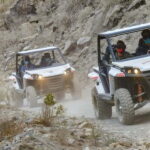
I love the mix of big scenery and small-town pauses. The best part is how the route threads through the Valley of the Thousand Palms toward charming villages like Fataga, with historic bits along the way (including a coffee stop in Tirajana and a look at the church). One consideration: this is real off-road driving, so expect bumpy tracks, narrow roads, and some height exposure.
In This Review
- Key things I’d plan around
- Why this south Gran Canaria jeep route feels different from the coast
- Pickup in the south, Maspalomas briefing, and the “air-conditioned” reality
- Roque Noblo viewpoints and the drive toward Presa de Chira
- Tirajana coffee break and that historic church pause
- Valley of the Thousand Palms and Fataga: village charm with real views
- Viewpoints on the way out: Degollada de las Yeguas and Mirador Las Moscas
- Lunch, aloe vera stops, and how to keep the day from feeling salesy
- Price and timing: is $74 a fair deal for this kind of day?
- Comfort, safety, and what to pack for bumpy roads
- Who should book this jeep tour, and who should think twice
- Should you book the South Gran Canaria off-road valleys and villages jeep tour?
- FAQ
- Is hotel pickup included?
- Can I get pickup from Las Palmas (the capital)?
- What languages does the guide speak?
- How long is the tour?
- What should I bring?
- Is it wheelchair accessible, and can I smoke on the jeep?
Key things I’d plan around
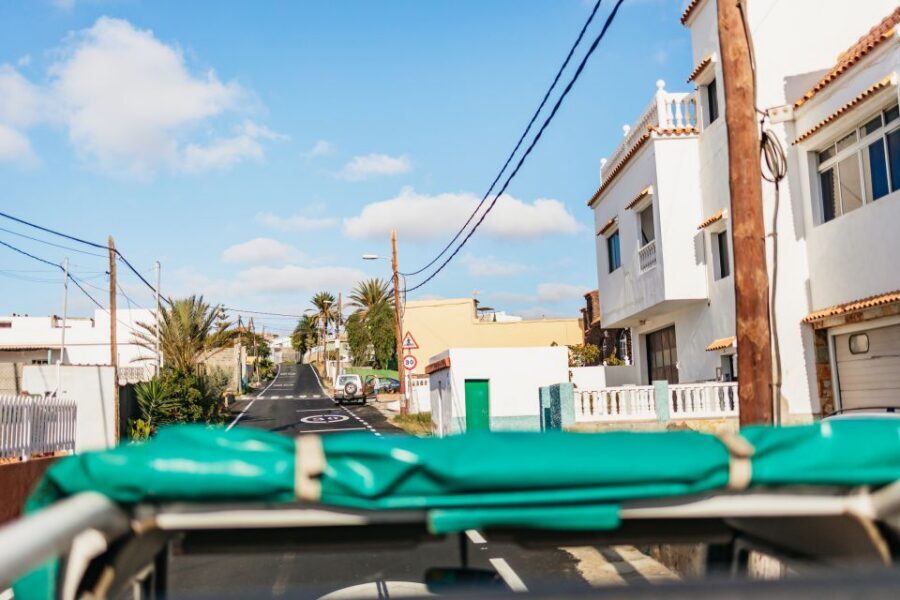
- Off-road driving on narrow, rough tracks with bumpy handling on dirt and gravel
- Roque Noblo photo stop for that classic Gran Canaria “wow” view
- Tirajana break with coffee and a historic church visit
- Valley of the Thousand Palms plus Fataga village for a contrast to the coast
- Multiple viewpoint moments including Mirador-style stops like Las Moscas and Degollada de las Yeguas
- South-only hotel pickup with a guide switching languages (English, French, German, Italian, Spanish)
Why this south Gran Canaria jeep route feels different from the coast
If your Gran Canaria plan is mostly beach time, this tour is a change of pace in the best way. The south can look dry and sculpted from a distance, but once you start moving inland, you see how many different pockets the island has. You’re not just passing through towns—you’re driving the back roads that connect them, so the day feels like a string of viewpoint “chapters” rather than a single long transfer.
I also like the balance here: you get scenery, but you also get short cultural stops. Fataga isn’t just a dot on a map; it’s part of the reason you’re on this route. And because the itinerary includes places like Lake Chira (Presa de Chira) and Tirajana, you don’t only experience rocky heights—you also see how water and farming shape the valleys.
The ride has an edge to it too. Several guides and drivers (names you may hear include Paco, Juan, Luis, and Karolis) keep the group moving, joke around, and make sure everyone knows what’s coming next—useful when you’re bouncing along mountain roads with tight turns and drop-offs.
Other Gran Canaria tours we've reviewed in Gran Canaria

Pickup in the south, Maspalomas briefing, and the “air-conditioned” reality
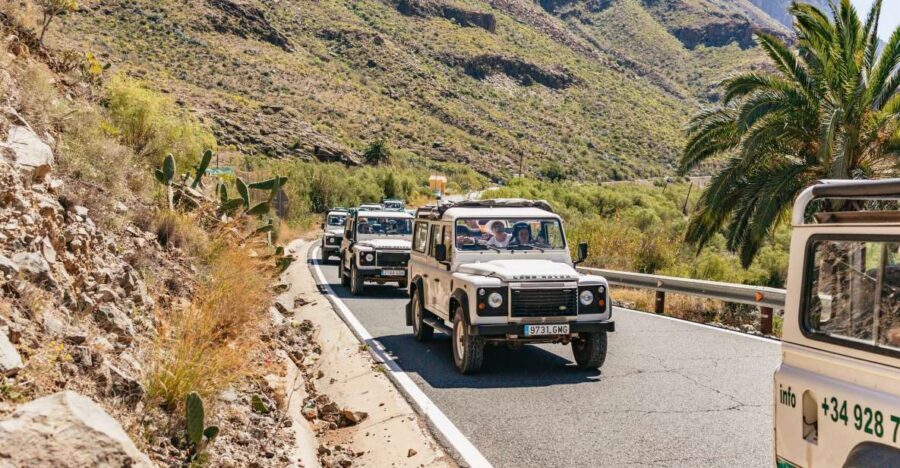
This is a south Gran Canaria pickup tour. You’ll be collected from a long list of south hotels and spots around Maspalomas and Playa del Inglés areas, so it’s usually convenient if you’re staying near the tourist strip. Plan to be ready in the lobby about 10 minutes before your scheduled pickup time, because the team confirms timing with you and runs the route in sequence.
Right after pickup, the tour sets you up with a group photo stop in Maspalomas and a safety briefing. That briefing is worth paying attention to even if you think you’re “fine”—the road type changes quickly once you leave the main roads. Think: slower, more jostling, and more attention needed around curves.
One detail from real-world experience: the jeeps are described as air-conditioned, but the common setup is more open-air than “sealed cabin.” If you’re sensitive to wind or temperature swings, bring a light layer. You’ll feel it more as you climb.
Roque Noblo viewpoints and the drive toward Presa de Chira
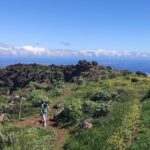
The tour’s first big identity is the inland mountain feel. You drive from the south toward spots like Salobre and into the higher valleys, and Roque Noblo sits right in the middle of the experience. This is the moment when the island looks instantly recognizable: towering rock, dramatic angles, and that sense of scale that you can’t get from a coastal promenade.
After that, you’re looking at the water-and-rock combo around Lake Chira (called Presa de Chira on the route). The drive here is where the jeep earns its reputation. You’ll be on scenic roads that switch from smooth to rough, and you’ll spend real time seeing the valley cut through the mountains. The timing gives you at least an extended scenic stretch, not just a quick drive-by.
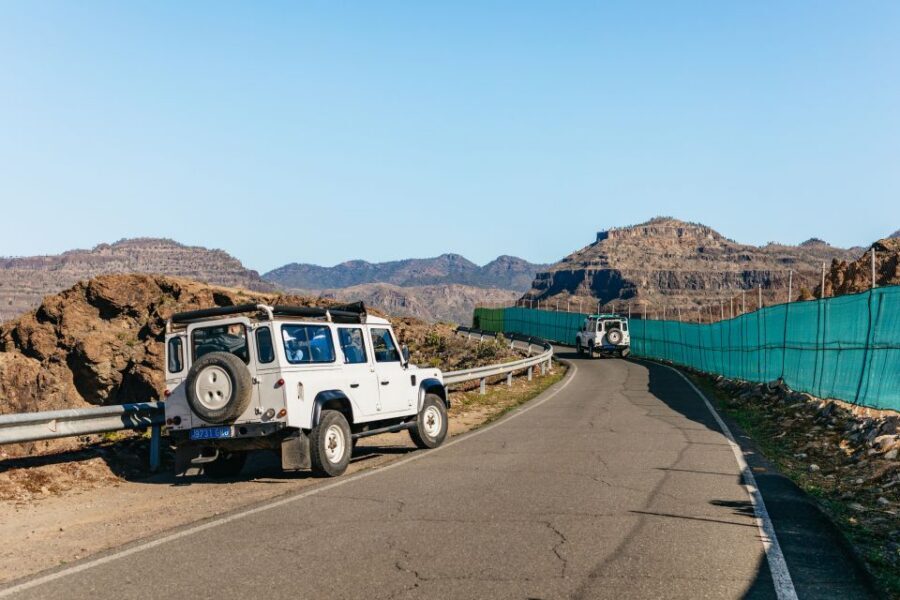
A practical note: the off-road section can be close to steep edges, and it can be bumpy enough that you’ll feel every turn. If you get nervous about heights, sit in a position you feel comfortable with and keep your eyes on the guide’s instructions. The better drivers in these groups take it steady when they notice someone is uncomfortable, and more than one guide has been praised for that calm, careful approach.
Tirajana coffee break and that historic church pause
San Bartolomé de Tirajana is where the tour slows down and gives you a break that isn’t just “stand and wait.” You’ll stop for coffee and you’ll have time to visit the town’s historic church. You’ll also get free time, which matters because it breaks up the dirt-road part of the day.
This is one of the better points to handle basic needs: bathroom access, stretching, grabbing a drink, and just resetting after the mountain driving. You get a block of time here—long enough to wander a bit if you want—but not so long that the day drifts.
If you’re thinking about meals, this is also a smart window. Lunch isn’t included, and the tour typically offers options, but it’s often easier to manage your food decisions when you’re already in town and not stuck waiting at a single restaurant.
Valley of the Thousand Palms and Fataga: village charm with real views
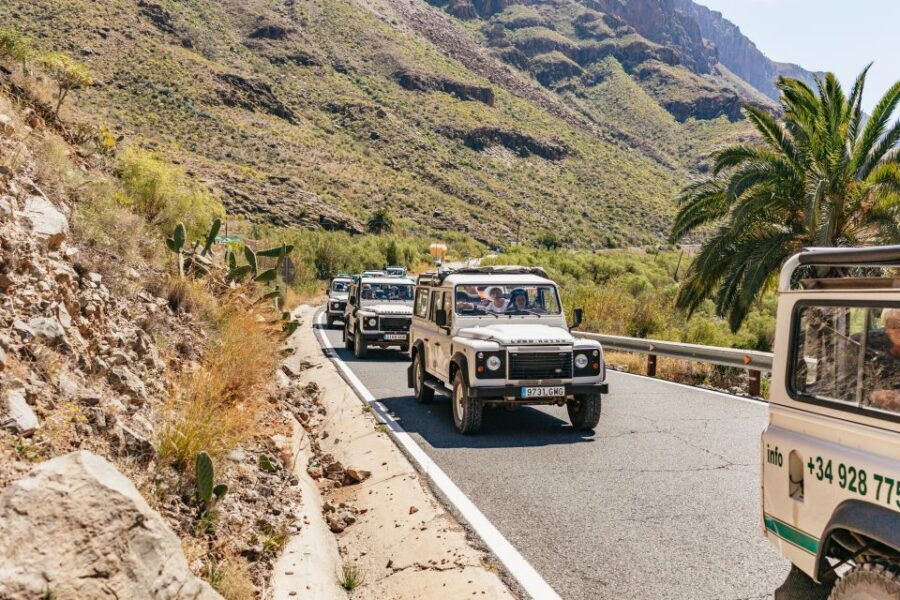
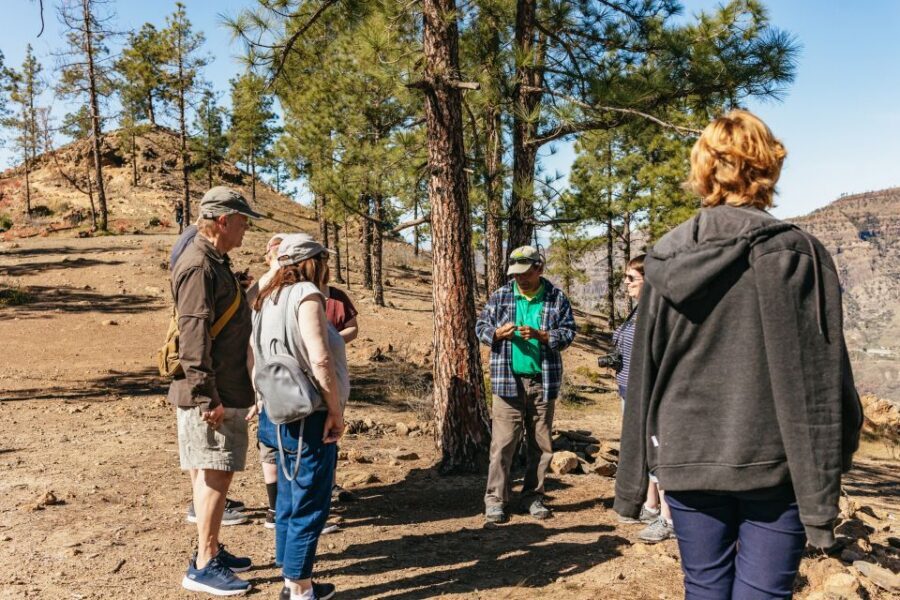
The Valley of the Thousand Palms is the name, and it really does shape the feel of the middle-to-late part of the tour. You go from dry, cactus-and-rock scenery into a greener valley vibe, and that contrast is exactly why this stop works. You’ll likely feel like you’re watching the island change as you go, not just traveling in one direction.
Then comes Fataga. The route includes time for the captivating village experience, and that’s where your photo stops get more than scenic backgrounds. You’re looking at old village character—streets and buildings that feel distinctly Canarian rather than “designed for postcards.” This is also the stage where the guides’ storytelling tends to click, because historic facts about the area land better when you’re actually looking at the place.
One nice rhythm: you get short drives between stops, then viewpoint pauses where the guide explains what you’re seeing. If you’re traveling with family, this is a good section for kids and teens too—less technical, more visible “look at that” moments.
Other jeep tours we've reviewed in Gran Canaria
Viewpoints on the way out: Degollada de las Yeguas and Mirador Las Moscas
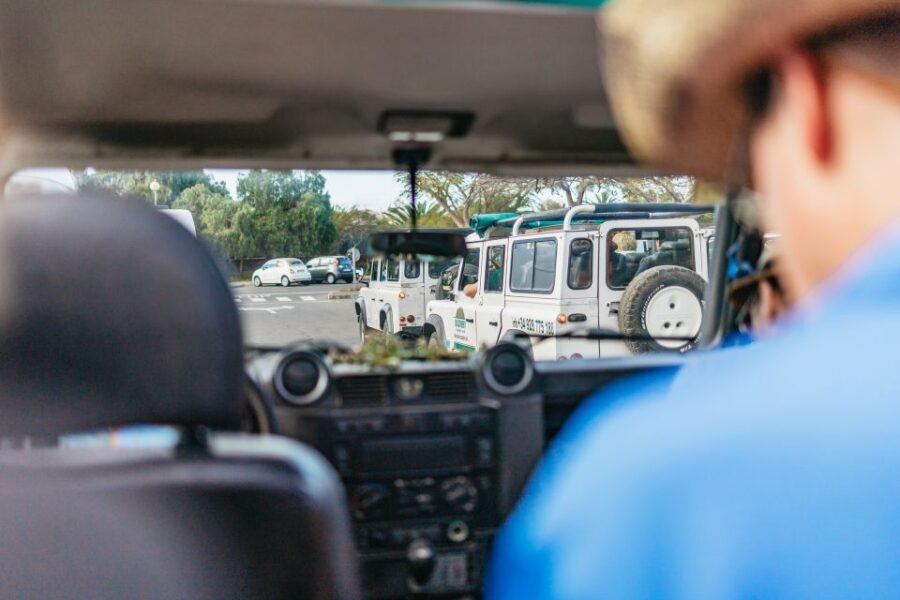
You’ll also hit more viewpoint-style stops later in the route. One of them is at Mirador Astronómico de la Degollada de las Yeguas, with time for a photo stop and a visit. It’s a quick but effective chance to grab wide views and get oriented before the ride finishes.
You’ll typically end with another mirador stop such as Mirador Las Moscas before drop-off. That final viewpoint is often when the day clicks into place, because you can look back on the route you’ve taken. The road line, the valleys, and the rock formations all start to make sense as a connected map, not random pulls off the road.
Lunch, aloe vera stops, and how to keep the day from feeling salesy
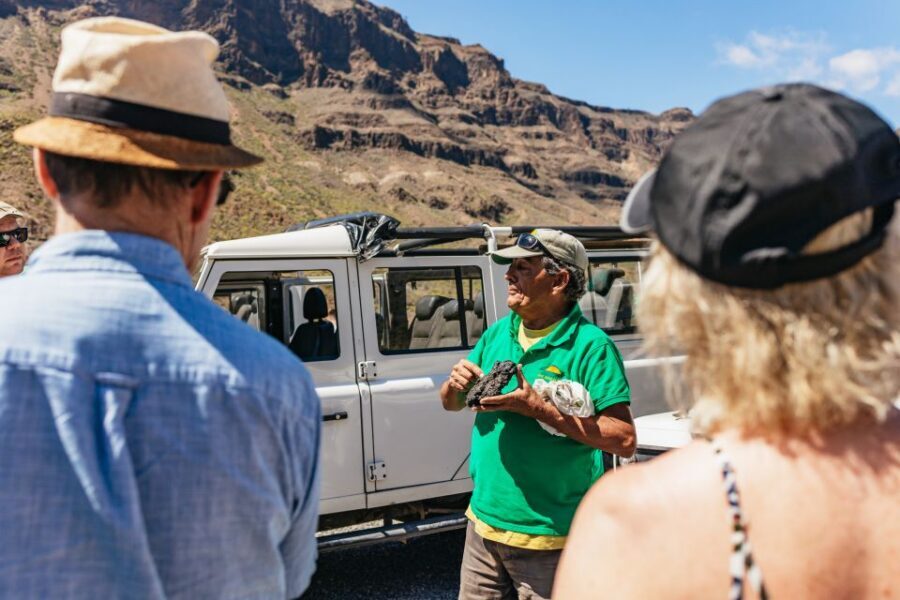
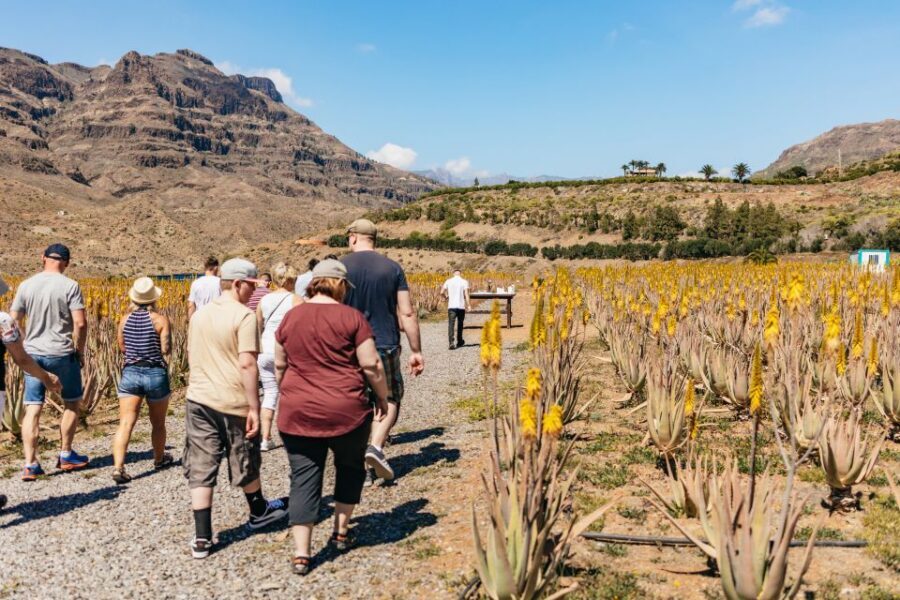
Lunch is not included. What you do get is a structured route with breaks. In practice, you’ll often have options offered at a farm stop connected to aloe vera products. You may see a presentation on how aloe is used, and you can buy products there.
Aloe vera stops can go either way on tours: sometimes they feel informative, other times like a push. Here, the general tone in the experiences people shared was that staff weren’t overly pushy, but products can be priced higher than you might expect. If you’re the kind of traveler who hates a hard sell, decide in advance: either treat it as a learn-and-sniff stop and walk out empty-handed, or plan for a small purchase.
For food, you might be offered a buffet lunch option at an extra cost (one commonly cited amount is around €15). Some people thought it was good value; others preferred eating elsewhere when free time allowed. My advice: bring snacks you like if you’re prone to getting hungry between stops. You can always skip snacks later, but you can’t undo hunger.
Also, if you’re offered an aloe vera product shop or an optional group photo, treat it as a bonus, not a requirement. One group photo option around €10 has been mentioned in experiences, so just factor that into your spending mindset.
Price and timing: is $74 a fair deal for this kind of day?
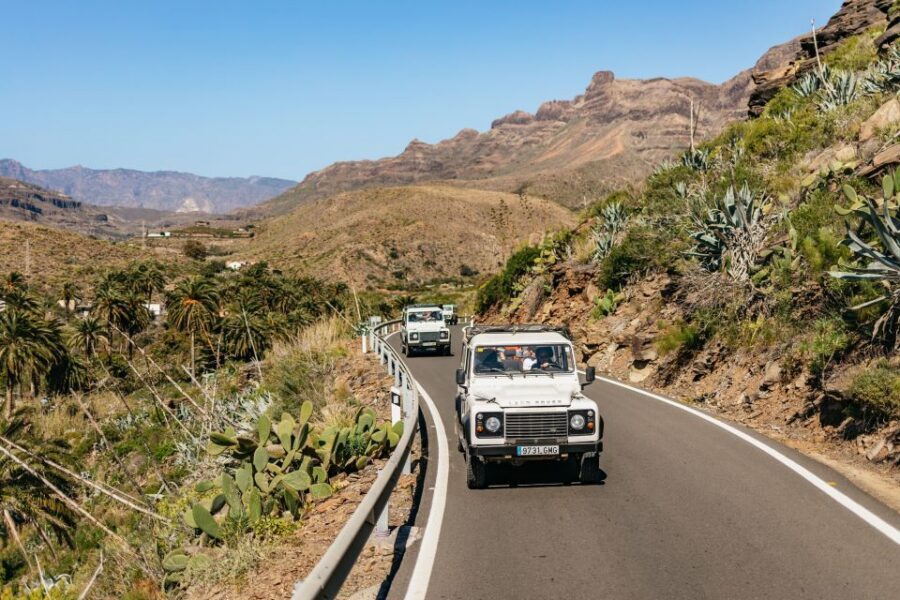
At about $74 per person for roughly a 5-hour tour (some people reported closer to 6 hours depending on the day and pickup timing), you’re paying for three things: inland transportation, a guide, and the “only roads like this” access that’s hard to replicate on your own without a serious driving plan.
If you’re used to island tours that are mostly driving and photo stops, this one is more hands-on. The off-road driving time is a major part of the value. You’re not just sitting in a bus; you’re in a jeep that’s meant for narrow tracks and rougher surfaces.
The other value piece is the guide language setup. Tours run with live guides and multiple languages (English, French, Italian, German, Spanish). You’ll usually be grouped by language during parts of the explanation, and that matters if you want to understand what you’re seeing and not just follow along blindly.
Comfort, safety, and what to pack for bumpy roads
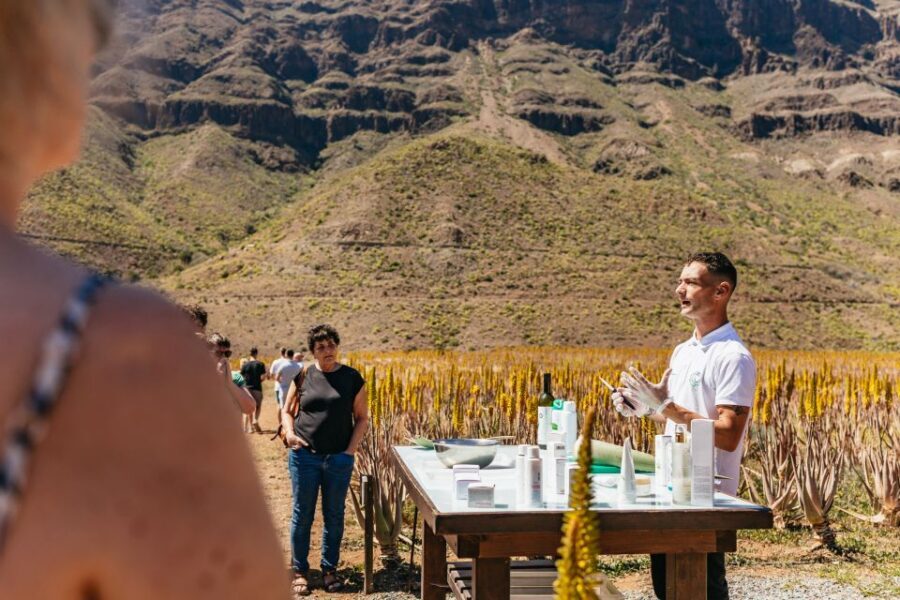
Bring sunscreen. That’s the one item the tour instructions clearly call out, and it makes sense: you’re moving between bright viewpoints for hours. Beyond that, pack for temperature swings. Even if the south is warm, higher points can feel cooler, and you’ll notice it during scenic stops.
For comfort:
- Wear shoes with grip. The roads can be dusty and uneven, and you might need to move around at viewpoint stops.
- Bring a light layer. The jeep setup can mean more wind than you expect.
- Don’t plan to smoke during the tour. Smoking in the vehicle isn’t allowed.
Safety is the other big practical point. The off-road tracks can be scary-looking, with steep drops and no crash barrier in some stretches. The good news is that the driving can be handled safely by competent drivers, and guides can adjust pacing when they notice nervous riders. Still, if you’re afraid of heights, this is the part to think hard about before booking.
Who should book this jeep tour, and who should think twice
This tour fits best if you:
- Want to see the interior of Gran Canaria, not just the coastline
- Like panoramic viewpoints and short village pauses
- Are okay with bumpy dirt-road driving and some height exposure
- Appreciate guides who keep things upbeat and explain what you’re looking at (you might hear stories from guides like Eduardo and Jer, and you can run into multilingual staff such as Karolis)
It may not fit you if:
- You’re very sensitive to heights or motion sickness
- You need wheelchair access (this tour isn’t suitable for wheelchair users)
Should you book the South Gran Canaria off-road valleys and villages jeep tour?
Yes, if you want a real change from beach days and you’re excited by off-road driving with multiple viewpoints, plus a genuine village stop. It’s also good value when you factor in guided storytelling, hotel pickup in the south, and the mix of Roque Noblo, Lake Chira, Tirajana, and the Valley of the Thousand Palms plus Fataga.
Skip it or be cautious if narrow roads and steep drops make you uncomfortable. In that case, choose a calmer tour with mostly paved routes.
FAQ
Is hotel pickup included?
Yes. Hotel pickup and drop-off are included in the south, from the listed pickup locations.
Can I get pickup from Las Palmas (the capital)?
No. Pickup from Las Palmas is not possible.
What languages does the guide speak?
The live tour guide language can be French, Italian, German, English, or Spanish.
How long is the tour?
The duration is listed as 5 hours.
What should I bring?
Sunscreen is the key item mentioned.
Is it wheelchair accessible, and can I smoke on the jeep?
No wheelchair access is available. Smoking in the vehicle is also not allowed.