REVIEW · GRAN CANARIA
Surf Gran Canaria : Premium Surf Lessons for All Levels
Book on GetYourGuide →Operated by PRO SURFING COMPANY S.L.U · Bookable on GetYourGuide
Your first wave is closer than you think. I like the personal coaching that adapts to your level and the 2 hours in the water you get for a one-day session. The only catch is you’ll plan around tides and weather changes, and pick-up isn’t included in the base price.
I also appreciate how the class flow goes from safety and theory to real surf practice fast. The meeting point is their shop, where you get your gear, a briefing, and instructors who can teach in English, Italian, and Spanish.
Expect a full workout with warm-up stretches, beach training for your pop-up and balance, guided time in the ocean, and then a cool-down and debrief. It’s built to be fun and confidence-building, not just about standing up once.
In This Review
- Quick hits you’ll feel during the lesson
- Why Surf Gran Canaria works for beginners and beyond
- The 4–5 hour day: what you do from shop to surf
- Meeting point at the shop: gear, briefing, and a smoother start
- Beach training: your pop-up and balance get real attention
- Safety and theory: not scary, just practical
- Water time: 2 hours of guided waves and continuous feedback
- Where you’ll surf: tide-and-weather scheduling means possible beach changes
- Value and price: what $77 buys you in real practice
- Private-group teaching and language: what that means for learning
- What to bring (and what to wear) so you don’t slow down
- Who should book this, and who should skip it
- Practical notes that make the day run better
- Should you book Surf Gran Canaria?
- FAQ
- FAQ
- How long is the surf lesson in total?
- How much time will I spend in the water?
- What is the price of the lesson?
- What’s included in the price?
- Is pick-up included?
- Are the lessons for beginners or advanced surfers?
- What languages do the instructors speak?
- How do they choose the lesson time and where you surf?
- What should I bring?
- Can I cancel and get a refund?
Quick hits you’ll feel during the lesson
.jpg)
- Small, private-group style teaching: You get qualified instructor support, not a crowd shuffling around.
- Two hours in the water: That’s real practice time, not just photos on the shore.
- Sand drills before the ocean: You learn the fundamentals on the beach, then transfer it to the waves.
- Safety and theory are built in: You get an intro to safety plus beach-based instruction before you go out.
- Free group lesson photos: Nice extra for remembering your first day without hunting for a camera.
- Extra encouragement during the learning curve: In-water help and continuous feedback are part of the plan.
Why Surf Gran Canaria works for beginners and beyond

Surf Gran Canaria is the kind of surf lesson that respects the learning curve. If you’re brand-new, the instructors focus on the basics you actually need: how to get stable, where to place your body, and how to handle a board safely. If you already surf, you’re still not stuck repeating the same drill for hours. The lesson format is designed to keep you improving instead of just waiting your turn.
What makes it feel “premium” here isn’t fancy marketing. It’s the structure: safety intro, theory on the beach, stretching, beach training, then guided water time with continuous feedback. That sequence matters because surfing punishes bad fundamentals fast. Fix the pop-up and balance on sand, and you’re much more likely to feel progress once you’re in the ocean.
You’ll also be dealing with real Gran Canaria conditions. Waves can be different from one session to the next. The team schedules lessons based on tides and weather to give you the best chance of good surf, even if that means changing beaches during the day.
One practical downside to keep in mind: the total day is longer than you might expect. The activity is about 4–5 hours, but only 2 hours are spent in the water. That’s normal for ocean sports, but it helps to mentally budget for the full flow.
Other Gran Canaria tours we've reviewed in Gran Canaria



The 4–5 hour day: what you do from shop to surf
.jpg)
The lesson day runs about 4–5 hours depending on the conditions and the ideal surf spot. Within that, you’ll get 2 hours on the water, including beach instruction and the practical part in the sea.
Here’s how the pacing usually feels:
1) Welcome, gear, and briefing at the shop
You arrive, get your equipment, and hear how the day will work. This is where you also learn the key safety points before anyone tries to toss you into waves.
2) Warm-up and stretching
Surf is hard on legs and core, and ocean time is not the place to “figure it out.” Expect stretches and warm-up exercises so your body is ready.
3) Beach training fundamentals
Before the real water, you practice on the sand: pop-up mechanics, balance, and basic wave positioning. This part is simple but important. Getting your feet under you matters more than most beginners think.
4) Theory and safety on the beach
You don’t just get told rules. You get a theory lesson that supports the in-water coaching. The goal is to help you act safely so you can focus on surfing.
5) Water time with guided assistance
Then you go in. You’re not out there alone. Instructors are in your orbit, helping with technique and offering continuous feedback as you try to catch waves.
6) Cool-down and debrief
After the last session, you cool down and talk through what worked and what to focus on next. That debrief is where your day becomes more than a one-time adrenaline rush.
If you like learning that’s hands-on, this format keeps you moving. If you’re hoping for a short “just take me in the water” experience, plan for more instruction time than you might expect.
Meeting point at the shop: gear, briefing, and a smoother start
.jpg)
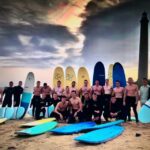
Your day begins at their shop, which is the meeting point. This is convenient because you don’t have to hunt down equipment at a beach parking lot. Instead, you pick up what you need in one place and get a briefing right away.
What’s included at the start:
- Surfboard
- Safety leash on the board
- Lycra (rash guard)
- Water
- A chocolate bar or energy bar
- Free photos on the group lessons
- Shuttle bus to the beach is available if you add it (more on that below)
You’ll also be told the plan for the day and introduced to your instructors. You’re learning in a guided environment from minute one, which helps especially on your first attempt to stand up on a surfboard.
Beach training: your pop-up and balance get real attention
.jpg)
A good surf lesson doesn’t start with the ocean. It starts with your body. On the beach, the instructors teach the fundamentals you need to do the pop-up correctly and stay balanced.
Here’s what you should expect in practice:
- Pop up: How to move from lying on the board to standing in one smooth motion.
- Balance: Where your weight should be so the board doesn’t flip or slide away from you.
- Positioning: How to line yourself up relative to the waves.
That beach time is also where you can ask questions without the noise of surf swallowing your words. If you’re nervous, this is often the moment your confidence starts to return. You’re not guessing. You’re copying a technique and getting corrected.
I also like that this lesson is explicitly designed for all levels. If you’re advanced, you’ll still benefit from having someone watch your stance and wave choice. If you’re a beginner, the instructors can slow things down to match your comfort level.
Safety and theory: not scary, just practical
.jpg)
Surf has a reputation for being laid-back, but your first day should still include real safety instruction. Here you get:
- An introduction to safety
- A theory lesson on the beach
- Safety guidance reinforced by qualified instructor assistance in the water
That matters because surfing safety is not only about avoiding injury. It’s about protecting you and others around you, and reducing the panic that comes from not understanding what’s happening under and around you.
Also, the fact that lessons are scheduled based on tides and weather is a silent safety benefit. Better conditions mean fewer surprise challenges and more time focused on technique.
You’ll want to take the safety rules seriously. They include what you bring, what you wear, and what you don’t bring into the experience. If you show up prepared, the day runs smoother for everyone.
A few more Gran Canaria tours and experiences worth a look
Water time: 2 hours of guided waves and continuous feedback
.jpg)
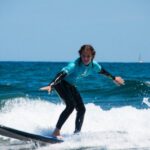
This is the part everyone cares about: catching waves. You’ll spend 2 hours on the water with your instructor. You’re guided, and you’ll receive personalized tips throughout, not one lecture at the start and then silence.
The instructors help you with:
- Getting ready to catch a wave
- Adjustments while you’re on the board
- Technique cues you can use immediately
- Ongoing encouragement as you build confidence
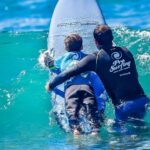
One learning detail that stands out from the way the instructors teach: they often use a step-by-step approach. For example, a coach named Dani has been described as teaching first on the sand, then encouraging and helping continuously in the water so a first-timer can actually enjoy the experience instead of white-knuckling it.
Your goal is not perfection in a day. Your goal is to leave with repeatable technique and the feeling that surfing is learnable.
And you’ll likely feel tired in the good way. Surf uses your legs and core hard, and after a few attempts, you’ll understand why balance is everything.
Where you’ll surf: tide-and-weather scheduling means possible beach changes
.jpg)
One thing to know up front: conditions change. The lesson is scheduled based on tides and weather to give you the best experience.
That also means you might need to visit different beaches for the best waves. It’s not a problem by default. It’s how surf operators keep lessons fun instead of punishing you with low-quality surf.
Practical takeaway for your planning: you’re committing to a whole morning/afternoon block (4–5 hours), and the team may adapt the location depending on ocean conditions.
Value and price: what $77 buys you in real practice
.jpg)
The listed price is $77 per person for a one-day surf lesson. At this price point, the question is always: do you get enough actual instruction time and support?
Here’s why this one looks like it can be worth it:
- You get a complete lesson structure: theory + beach training + in-water coaching
- You get core gear provided: board, leash, and rash guard
- You get 2 hours in the water
- You get refreshments: water and a chocolate/energy bar
- You get free photos from the group lesson
Also, the lesson is described as a private group experience, which often means you’re not fighting for attention in a huge crowd.
One cost consideration: pick-up is not included in the base price. If you need help getting to the beach, you can add a shuttle bus service for €15, covering the whole group up to 8 people. If you’re already near the meeting point and can get yourself to the beach area, you might save that add-on.
If you’re trying to do surfing without paying for extra gear rentals or wasting time hunting for transportation, this setup is the kind that keeps your budget under control.
Private-group teaching and language: what that means for learning
.jpg)
The instructors teach in English, Italian, and Spanish. That matters if you want clear coaching cues rather than guessing from gestures.
The experience is also described as a private group. Even if “private” sounds like marketing, in surf lessons it usually means better instructor-to-student attention. You can ask a question. You’re more likely to get corrected before a bad habit locks in.
The result: you spend more time practicing and less time waiting.
What to bring (and what to wear) so you don’t slow down
For a smooth day, bring:
- Biodegradable sunscreen
- Comfortable clothes
- Beachwear
And wear:
- The rash guard is provided, but you still want swim-ready clothing that lets you move.
- Avoid high-friction footwear. In fact, high-heeled shoes aren’t allowed.
From a comfort standpoint, I’d also suggest bringing a change of clothes for after. The day includes water time, so you’ll want to warm up quickly once you’re done.
Who should book this, and who should skip it
This lesson is designed for all levels, but it is not for everyone. It’s not suitable for children under 2, and it also lists a long set of limitations related to medical conditions and physical constraints.
You should take the “not suitable for” guidance seriously if any of these apply:
- Pregnancy
- People with back problems, heart problems, epilepsy, or respiratory issues
- People with mobility impairments or wheelchair users
- Non-swimmers
- People with conditions that can make surfing unsafe, including those prone to seasickness or motion sickness
There are also age and weight limits listed in detail. If you’re close to the edges or have any relevant medical condition, check the requirements before you book.
Best fit:
- First-timers who want proper instruction on sand and in the water
- People who already surf but want focused feedback
- Anyone who likes clear coaching and step-by-step progress
If you’re expecting a casual “just have fun, no rules” session, this isn’t the style. It’s a guided lesson with safety at the center.
Practical notes that make the day run better
A few small details can make a big difference on surf day:
- Be ready for a 4–5 hour block, even though you’re only in the water for 2 hours.
- Bring biodegradable sunscreen. It’s required.
- Arrive prepared for possible beach changes based on tides and weather.
- If you need transportation, check whether you’ll add the €15 shuttle.
- The day includes a leash on the board, rash guard, and water plus a snack. Still, you’ll want your own sense of timing for bathroom breaks and hydration.
Also, follow the rules about what’s allowed and not allowed. The list includes items like pets (with assistance dogs allowed), drones, weapons or sharp objects, and smoking in the vehicle. The easiest way to keep things stress-free is to pack only what you need.
Should you book Surf Gran Canaria?
Book it if you want a structured, instructor-led surf lesson in Gran Canaria with real practice time and safety built into the day. The combination of beach training, theory on shore, and continuous in-water feedback is exactly what you want when learning something that’s equal parts technique and nerve.
Skip or double-check first if you’re affected by any of the listed medical constraints, have mobility limitations, or if you’re unsure about the age/weight requirements. Surf isn’t the place for guessing.
If you can handle a longer day that includes instruction time and possible beach changes, this lesson looks like a solid way to get off the shore with actual progress.
FAQ
FAQ
How long is the surf lesson in total?
The total activity is approximately 4–5 hours, depending on the ideal surf spot for the day.
How much time will I spend in the water?
You’ll spend 2 hours on the water, including the theoretical and practical components on the beach.
What is the price of the lesson?
The price is listed as $77 per person.
What’s included in the price?
Included items are surfboard, safety leash, lycra (rash guard), intro to safety, a beach theory lesson, instructor coaching, water, a chocolate bar or energy bar, and free photos on the group lessons. A shuttle bus to the beach is also included as an option/add-on service.
Is pick-up included?
Pick-up is not included in the base price. A shuttle bus service is available for an additional €15 for the entire group (up to 8 people).
Are the lessons for beginners or advanced surfers?
The lessons are for all levels, from beginners to advanced surfers.
What languages do the instructors speak?
Instructors speak English, Italian, and Spanish.
How do they choose the lesson time and where you surf?
Scheduling is based on tides and weather conditions to ensure the best experience. You might visit different beaches depending on conditions.
What should I bring?
Bring biodegradable sunscreen, comfortable clothes, and beachwear.
Can I cancel and get a refund?
Yes. Free cancellation is available up to 24 hours in advance for a full refund.