REVIEW · GRAN CANARIA
Gran Canaria: Canyoning Trip
Book on GetYourGuide →Operated by MOJO PICON AVENTURA · Bookable on GetYourGuide
You’ll earn your bragging rights fast. This Gran Canaria canyoning trip mixes forest walking with real action like jumps, rappels, and natural slides inside a canyon with multiple waterfalls. I like that the guides (often Miguel or Viktor) run the day with clear coaching so you know what’s coming.
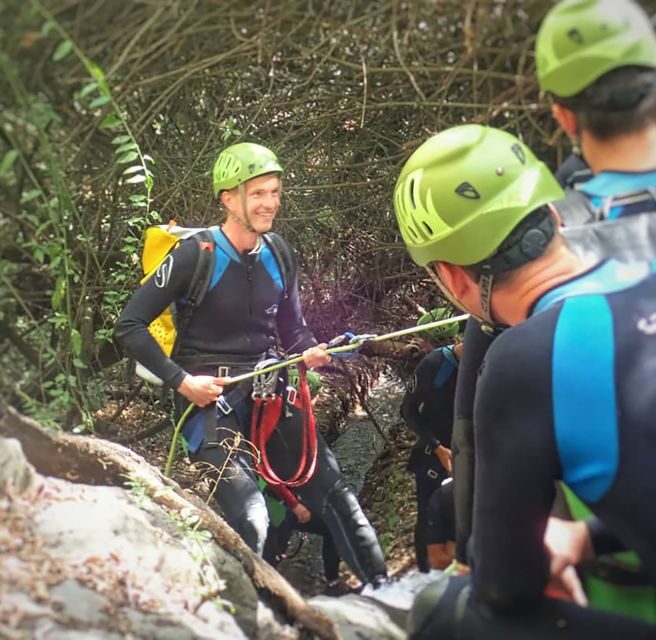
One of my favorite parts is how much the company handles for you. You’re kitted out in wetsuit + helmet + safety gear, then they include a small picnic, and even a free picture report so you can focus on the canyon instead of your phone.
The main catch to think about is effort and comfort. The return can involve a steep, hot hike with wet gear, and sport shoes aren’t included, so you’ll want footwear that grips well when everything turns slick.
In This Review
- Key highlights at a glance
- Gran Canaria canyoning, in plain terms: what you actually do
- Timing and the 9:30 meet-up at Decathlon Telde
- Waterfalls, jumps, slides, and abseiling: the heart of the day
- Expect multiple waterfall descents
- Slides aren’t just for kids
- Abseiling is the main skill you’ll learn
- Jumps and swimming happen when the route says so
- Safety setup: wetsuit, helmet, harness, and a guide who stays on task
- The guide experience is the real differentiator
- What to bring: sport shoes matter more than you think
- Not suitable for everyone
- How challenging is it for beginners?
- Picnic and photo report: the small extras that raise the value
- Getting to the canyon: transport and the feeling of a smooth day
- When conditions change, the adventure may change too
- Value check: is $77 worth it?
- Should you book the Gran Canaria canyoning trip?
- FAQ
- How long is the canyoning trip?
- Where do I meet for the tour?
- Do I need previous canyoning experience?
- What ages can join?
- What equipment is included?
- What’s included in the price?
- Is there a guide and what languages are spoken?
- Do I need to bring sport shoes?
- Is the tour suitable for pregnant women?
- Should I expect the canyon to change?
Key highlights at a glance
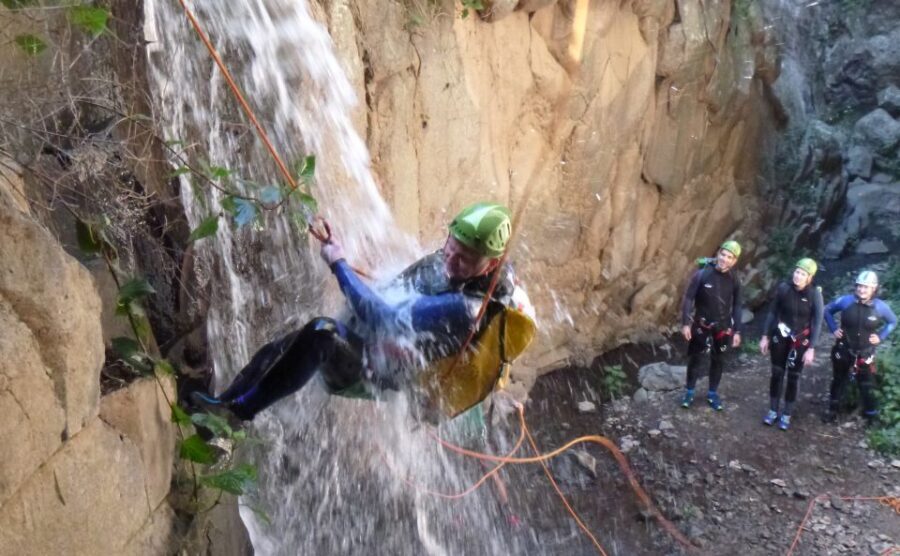
- Beginner-friendly canyoning with no experience required (10 to 70 years old)
- Waterfalls and natural slides plus jumps, swimming, and abseiling
- Small groups (max 10) with an English-speaking (and Spanish/English) guide
- Full safety kit included: wetsuit, helmet, harness, carabiners, descender
- Picnic + free photo report to help make the day feel complete
- Expect a real hike back in sun and heat with wet gear on you
Gran Canaria canyoning, in plain terms: what you actually do
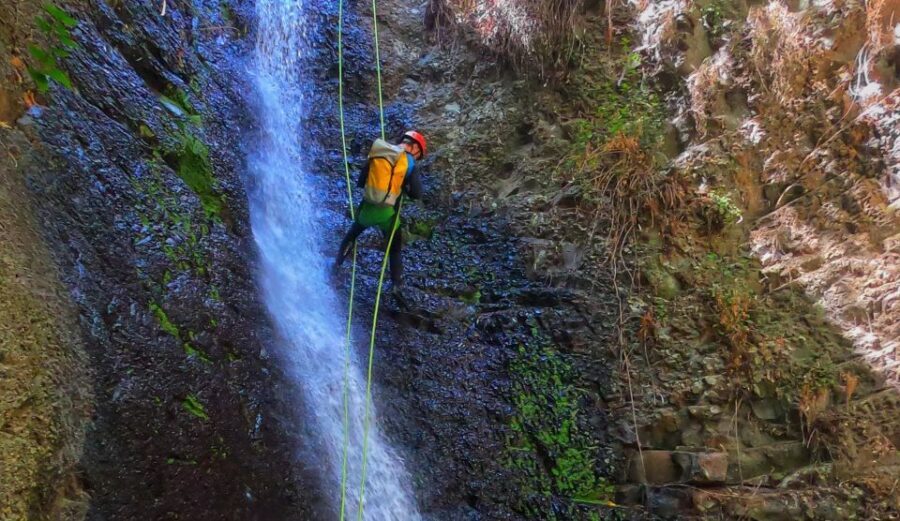
This is not a sit-and-look nature tour. It’s a guided canyoning day where you move through a barranco (canyon) using a mix of hiking and water-based obstacles. The route is designed to be approachable even if you’ve never done this before.
Your time in the canyon typically includes:
- Walking along the watercourse
- Jumping where the route calls for it
- Swimming short sections when it fits the water depth and route
- Abseiling/rappelling down drop-offs
- Slides that are part natural, part route feature
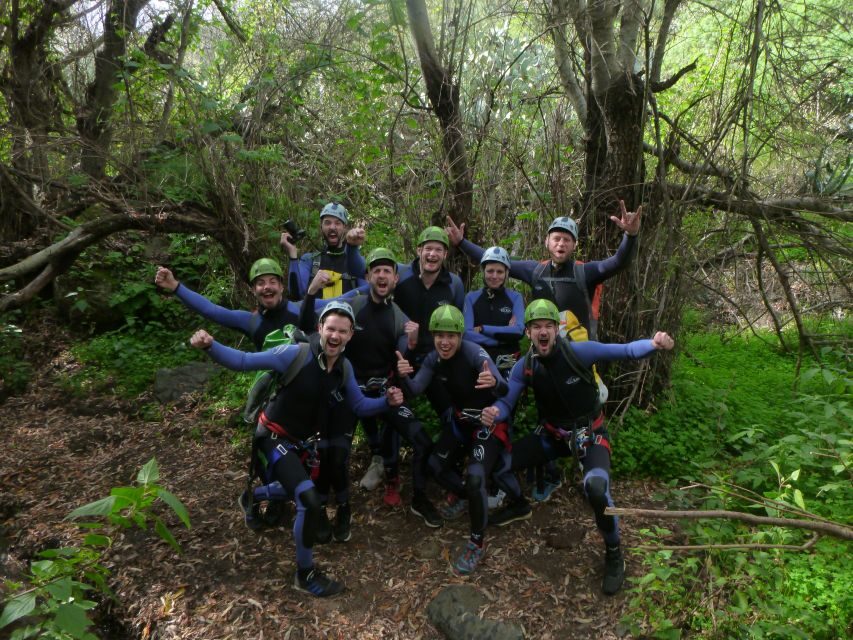
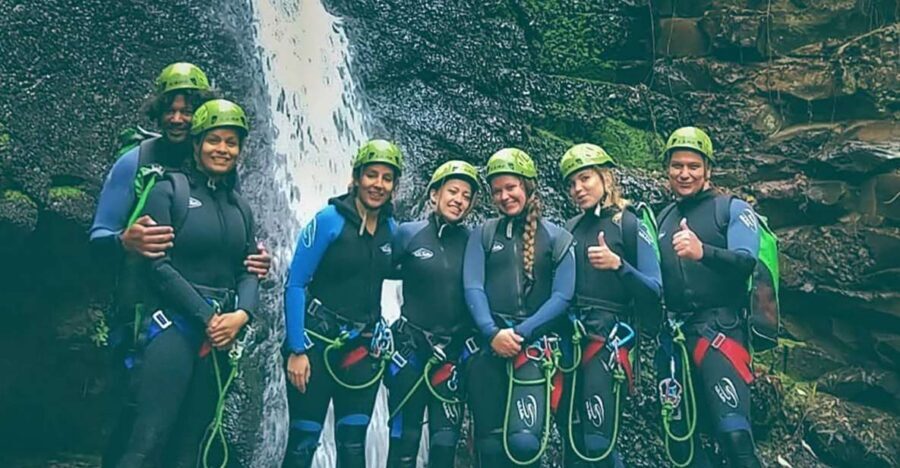
The canyon environment is part of the payoff. You’re in a green forest setting with waterfalls (the trip description notes 4 waterfalls between 5 and 20 meters) and some natural slides. That matters because it turns the day into something more than just “trying ropes.” You’re seeing the island’s interior in a way most people never will.
Other Gran Canaria tours we've reviewed in Gran Canaria
Timing and the 9:30 meet-up at Decathlon Telde
The standard start is 9:30 at the Decathlon Telde store parking (meeting point in the provided map). From there, the plan is a straightforward handoff to your guide and then onward to the canyon area.
A couple timing notes that help you plan your day:
- The activity runs about 5 hours total.
- Within that, you’re doing roughly 4 hours of canyoning (the rest is changing, briefing, and transfers).
Also, know this: they may switch to a different canyon if conditions call for it. That’s not a red flag—it’s smart safety management. They’ll confirm the exact meeting point by email once the final canyon choice is locked in.
If you’re coming by bus, one of the better practical tips from real people is that you can get to the Decathlon area and then let the guide handle the jump from there to the stream valley. In other words, you’re not stuck figuring out backroads alone.
Waterfalls, jumps, slides, and abseiling: the heart of the day
This is the part you’ll remember. The canyon route is built around a sequence of “oh wow” moments—then doing them for real, safely, with instruction.
Expect multiple waterfall descents
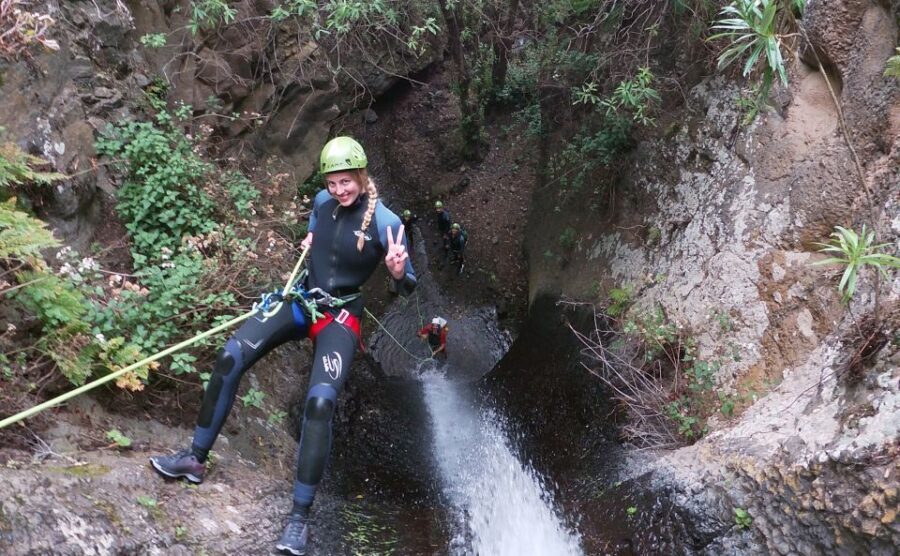
The description specifically calls out four waterfalls ranging from 5 to 20 meters. That range is useful because it means your day isn’t just one short rappel. You’ll get variety: some drops are more about control and body position, while bigger ones (the upper end of that range) are where your nerves get a chance to show up—and then shrink.
Slides aren’t just for kids
Natural slides can sound casual, but in canyoning they’re part of a controlled route. You’ll be briefed on how to approach them and where to place your body so you can ride without turning it into a scramble.


Abseiling is the main skill you’ll learn
Abseiling/rappelling is the big technique focus. The guide should explain each rappel before you go. A repeated theme in the feedback is that the guides watch you closely the whole time, not just at the start, and you’ll feel more secure as you see how they manage each person’s turn.
Jumps and swimming happen when the route says so
You don’t jump because you feel brave. You jump because the route offers it—and you’re coached on safe choices. Swimming segments are typically short and practical, not long “trek across the water” swims.
If you’re the type who likes a physical challenge but still wants real safety structure, this mix usually hits the sweet spot: adrenaline, but guided.
Safety setup: wetsuit, helmet, harness, and a guide who stays on task
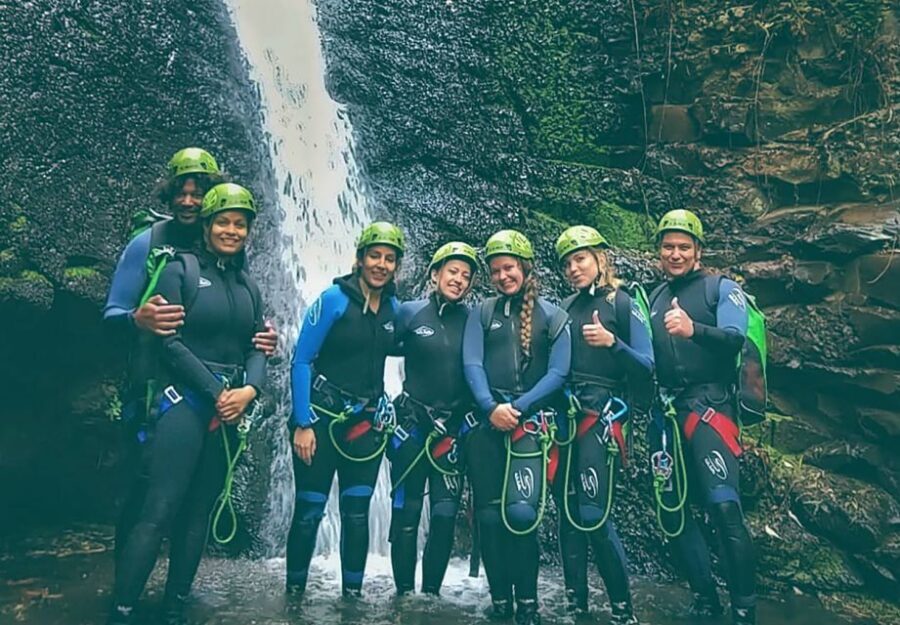
Canyoning can look chaotic from the outside. The best versions of it are the opposite: disciplined, slow prep, then controlled action.
Here’s what’s included for your protection:
- Neoprene wetsuit
- Helmet
- Harness
- Safety equipment such as carabiner and descender
- Insurance coverage as part of the tour
You’re not expected to bring your own safety gear. That’s a big value point for a short trip to Gran Canaria—less shopping, less guessing about sizing.
The guide experience is the real differentiator
In the reviews, different guide names show up, especially Miguel and Viktor (and also guides sometimes described as professional instructors). The common thread is confidence plus clarity: they give instructions that are easy to follow and then keep an eye on you during the tricky moments.
A smart bonus: they take pictures of everyone as you do the key moves. That means you’re not tempted to fish your phone out mid-action. You still get something shareable afterward through the free picture report.
What to bring: sport shoes matter more than you think
The activity provides the core canyoning gear, but sport shoes are not included. That’s important because canyoning usually means wet rocks, slippery footing, and occasional scrambling.
So I’d treat footwear as your priority purchase (or rental). Look for shoes you can get wet and that hold traction. One practical tip that fits this reality: people have reported buying wet-ready hiking shoes at Decathlon at the start of their trip, right at the meeting area.
Other “bring for comfort” advice is simple: plan for getting wet. Even if you’re in a wetsuit, you’ll still come out soaked, and you’ll want something dry enough for the ride back.
Not suitable for everyone
This trip is stated as not suitable for pregnant women. It also works for a broad age range—10 to 70 years—but that doesn’t mean it’s effortless.
How challenging is it for beginners?
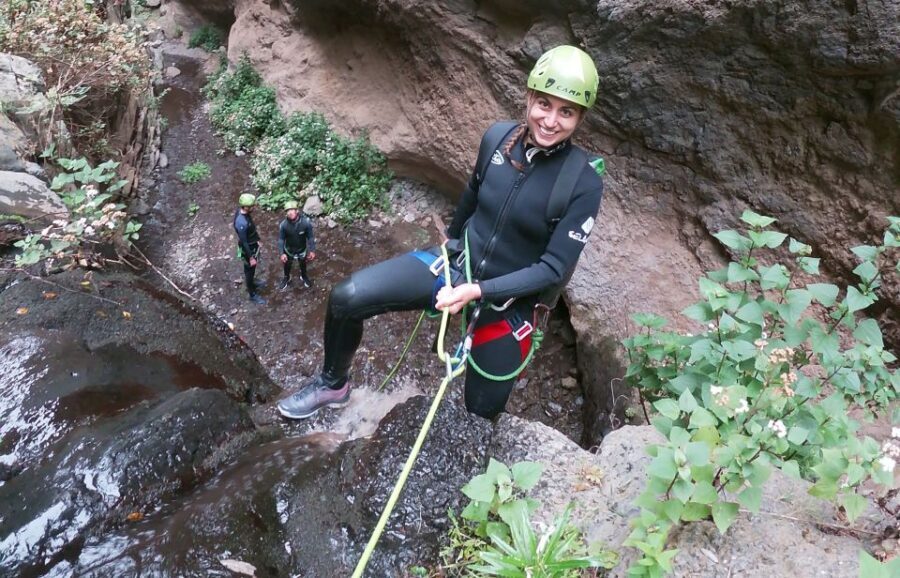
Beginner-friendly doesn’t mean you’ll stroll the whole time. Here’s the honest balance: the canyoning skills themselves are taught on the spot, and the included safety setup reduces the “I’m going to mess this up” fear.
But you still do real outdoor work:
- Expect a hike through the canyon approach and an active route.
- The return segment can be steep and hot.
- You carry wet gear with you, which can feel heavier than you expect.
- Some paths can be narrow, with hands needed for balance in spots.
So if you’re thinking about booking, I’d match the trip to your fitness style:
- Great match if you’re okay with being outside, active, and getting wet.
- Less great match if you want low-impact sightseeing only.
The good news: the route is specifically described as ideal for inexperienced people, and the guide support is part of why beginners can handle it. Clear explanations, close supervision, and a steady rhythm make a difference.
Picnic and photo report: the small extras that raise the value
A lot of adventure tours stop after the hard part. This one keeps you taken care of.
Included at the end (or during the flow) is a picnic with:
- Chocolate
- Biscuits
- Fruit
- Water
It’s not a fancy lunch, but it’s the right kind of fuel after you’ve been moving and cooling down in water.
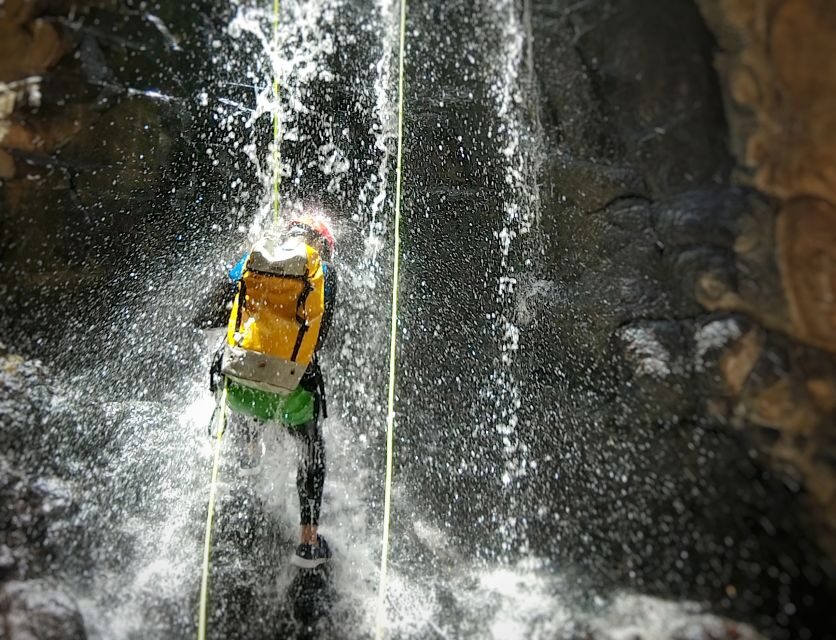
Then you get a free picture report. That’s a surprisingly big deal for this style of activity because good canyoning shots are hard to take yourself. The guides taking photos as you go also means less “hold your camera above your head and hope.”
Getting to the canyon: transport and the feeling of a smooth day
Logistics matter more on an island tour than people expect. Here, pickup and drop-off are included depending on availability, and multiple comments describe transport that takes you closer to the canyon.
Even if you use public transport to reach the meet-up point, the rest of the heavy lifting seems handled by the operator. The goal is simple: don’t turn a half-day adventure into a day of commuting stress.
One more practical heads-up: because the canyon can be changed for best conditions, the meeting point may be confirmed again by email with the final details. If your plans are tight, read that email carefully the day before.
When conditions change, the adventure may change too
Canyons depend on weather and ground conditions. This trip explicitly notes that a change of selected canyons may occur to ensure the best canyoning conditions.
In addition, there are signs they won’t leave you stranded if something makes canyoning impossible. One account shared that when canyoning couldn’t run due to warnings, the group was offered a different adventure along the coast that included cliff action such as jumps from height into the sea, plus abseiling and ziplines. That’s not guaranteed for every day, but it does show the operator tends to try to keep the day alive rather than cancel without options.
Value check: is $77 worth it?
For $77 per person and about 5 hours, you’re not only paying for the activity. You’re paying for:
- A small group setup (up to 10 people)
- An English-speaking guide (Spanish/English offered)
- Full safety gear including wetsuit, helmet, harness, and descender equipment
- Insurance coverage
- Picnic items and water
- A free photo report
- Hotel pickup/drop-off when available
If you’ve ever priced out guided outdoor activities that include both gear and instruction, you’ll recognize the value here. The “hidden costs” are usually what blow up the budget: renting equipment, buying gear you might not reuse, and paying for a guide. This one folds those into the price.
The biggest reason it might not be worth it for you is if you’re not ready for physical effort and getting wet. If that part sounds fine, it’s a strong value play.
Should you book the Gran Canaria canyoning trip?
Book it if you want a hands-on experience in Gran Canaria—real movement, real water, and a guide who takes safety seriously. It’s especially a good choice if you’re a beginner who still wants adrenaline, but you want it controlled.
Skip it if:
- You want a purely relaxed walk-and-photo day.
- You don’t like steep, hot hikes back with wet gear.
- You need a pregnancy-safe option (this one is listed as not suitable).
If you’re on the fence, here’s my quick decision rule: if you can handle getting wet, climbing a bit, and following instructions closely, you’ll likely leave feeling proud—not just entertained. And with the included picnic plus that free picture report, your day doesn’t end when the canyon walk does.
FAQ
How long is the canyoning trip?
The total activity time is listed as 5 hours. It also notes about 4 hours of canyoning within that overall window.
Where do I meet for the tour?
Meet at 9:30 at the Decathlon Telde store parking. The exact meeting point may be confirmed by email if the selected canyon changes.
Do I need previous canyoning experience?
No experience is required. It’s described as ideal for inexperienced people.
What ages can join?
The trip is for ages 10 to 70.
What equipment is included?
You’ll be provided with canyoning equipment including a wetsuit, helmet, and safety gear such as a harness plus items like a carabiner and descender.
What’s included in the price?
Included items are the English-speaking guide, canyoning equipment, insurance, a picnic (chocolate, biscuits, fruit, and water), a free picture report, and hotel pickup/drop-off depending on availability.
Is there a guide and what languages are spoken?
Yes. The guide is listed as Spanish and English, and the tour includes an English-speaking guide.
Do I need to bring sport shoes?
Sport shoes are listed as not included, so you’ll want to have appropriate footwear for wet, rocky conditions.
Is the tour suitable for pregnant women?
No. It’s listed as not suitable for pregnant women.
Should I expect the canyon to change?
Yes, a change of selected canyons may occur to ensure the best canyoning conditions, and the subsequent exact meeting point will be confirmed by email.