REVIEW · GRAN CANARIA
Beginners Scuba Diving Experience in Gran Canaria
Book on Viator →Operated by Blue Water Diving · Bookable on Viator
One breath underwater changes everything. I like the step-by-step skill coaching and the small-group feel, where an instructor stays close while you practice breathing in shallow water before you head out to the reef swim. All equipment is included, so you only need your swimwear. One possible drawback: on busier days, the session can feel time-tight, so confirm start/finish timing if you want extra shallow-water practice.
This is also a smart way to test scuba without committing to a full training course. You get a controlled first experience that helps you figure out whether you actually want to continue with open-water training later.
Just plan logistics up front: there’s no hotel pickup and the group is capped at 8 travelers, so you’ll want clear directions to the meeting point. Also double-check the actual beach location for your day, since some schedules operate from the south side of the island rather than right by central Las Palmas.
In This Review
- Key Points to Know Before You Go
- Why This 2-Hour Scuba Try-Out Can Beat a Full Course
- Meeting at Blue Water and Getting Set Up Without Stress
- Shallow Skills in the Harbor: Learning to Breathe and Stay Calm
- The Reef Swim: Marine Life Meets Real Three-Dimensional Movement
- Safety Feel: Small Groups, Close Coaching, and Constant Oversight
- Price and What You’re Actually Paying For
- Location and Transport Reality: Las Palmas Address vs Southern Beaches
- Timing That Can Vary: What the Two Hours Really Includes
- What to Bring (Besides Courage)
- Who This Beginner Session Suits Best
- Should You Book This Beginner Session in Gran Canaria?
- FAQ
- How long is the beginner session?
- What does it cost?
- Is the session in English?
- Is equipment included?
- Do I need hotel pickup or drop-off?
- What’s the minimum age?
- Do I have to complete a health questionnaire?
- Is it recommended if I just flew recently?
- How big is the group?
- What happens if the weather isn’t good?
Key Points to Know Before You Go
- Small groups (max 8) mean more attention during the skills practice.
- All gear included so you don’t have to hunt down a wetsuit, mask, or tank before your trip.
- Shallow-water breathing practice first helps nervous first-timers get control before any reef time.
- Professional instructors throughout keep a close eye, and you’re supported step-by-step.
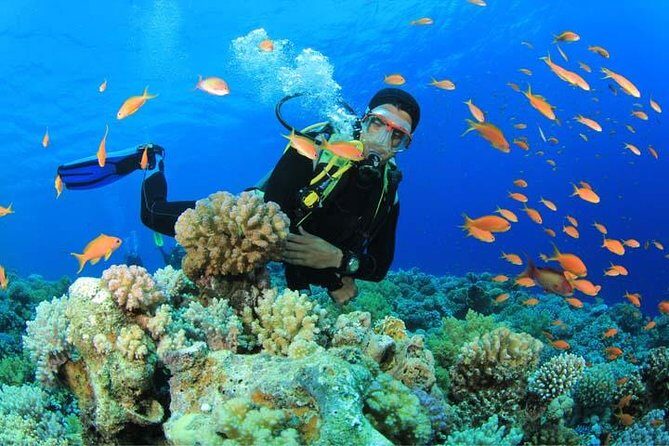
- Real marine life on a short outing, with chances to see fish, crabs, sea cucumbers, and more.
- No hotel pickup and no food/drinks included means you should plan your transport and a snack.
Why This 2-Hour Scuba Try-Out Can Beat a Full Course
If you’ve never done scuba before, the main question isn’t can you do it. It’s whether it feels safe and doable once you’re underwater.
This experience is designed for that exact moment. In about two hours, you start with basic skills in shallow water, then you move on to an underwater reef swim. That structure matters because it turns scuba from something scary-looking into a sequence of skills you can repeat, get feedback on, and build confidence around.
Price-wise, $108.89 per person can look like a lot until you compare it to the cost of a full certification path. Here, you’re paying for a guided try-out with a professional instructor and all necessary equipment. You’re not funding days of class time and ongoing training—just a concentrated first session that can spark interest or help you decide to pass.
Other Gran Canaria tours we've reviewed in Gran Canaria

Meeting at Blue Water and Getting Set Up Without Stress
Your start is at Blue Water at Calle Olimpicos, C. Doreste y Molina, s/n, 35130 Gran Canaria, Las Palmas, Spain. The session ends back at the same meeting point, so plan your day around an easy round trip rather than a long transfer across the island.
What usually happens first is straightforward:
- You meet your instructor at the center.
- You complete paperwork.
- You get equipment organized and fitted.
You’ll also get a confirmation at booking time, and you’ll use a mobile ticket to check in. The experience is offered in English, so you won’t have to gamble on translation for safety instructions.
One detail I like for first-timers: with a maximum of 8 people, the instructors can spend real time on fitting your gear and checking that everyone’s comfortable. That’s a small thing on paper, but it shows up in how quickly you settle down.
Shallow Skills in the Harbor: Learning to Breathe and Stay Calm
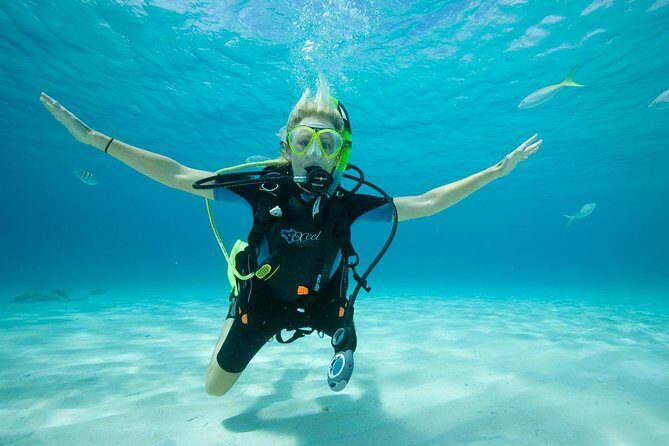
The first real hurdle is breathing underwater without panic. This is where the experience earns its keep.
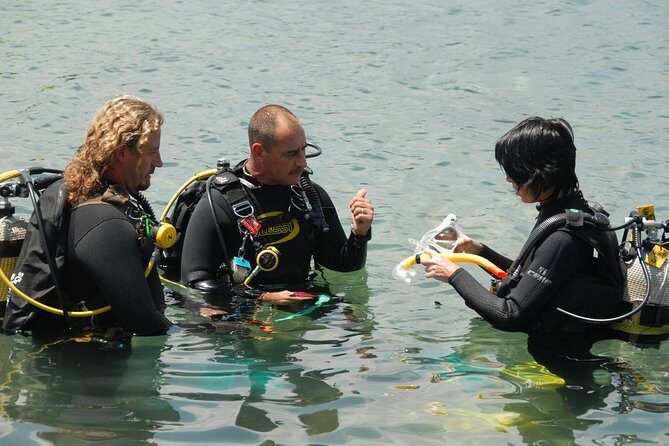
You begin in shallow water and do a skills session focused on:
- breathing through the regulator
- feeling comfortable with the equipment
- basic underwater control so you can move without fighting your gear
In practice, the training is often very hands-on. In some sessions, you may kneel in the harbor area while you practice, which is a smart move for beginners. It keeps you closer to the bottom and makes it easier to focus on breathing, posture, and simple movements rather than floating anxiety.
A big plus from real experiences: instructors often stay patient if you feel nervous. Several first-timers describe anxiety in the water and then credit the instructor for slowing things down, helping them breathe more calmly, and working until they felt ready.
If you’re hoping for a gentle, confidence-first start, this part delivers. It’s also why you’ll likely walk away knowing what scares you most (breathing, buoyancy, or simply being underwater) and how to manage it.
The Reef Swim: Marine Life Meets Real Three-Dimensional Movement
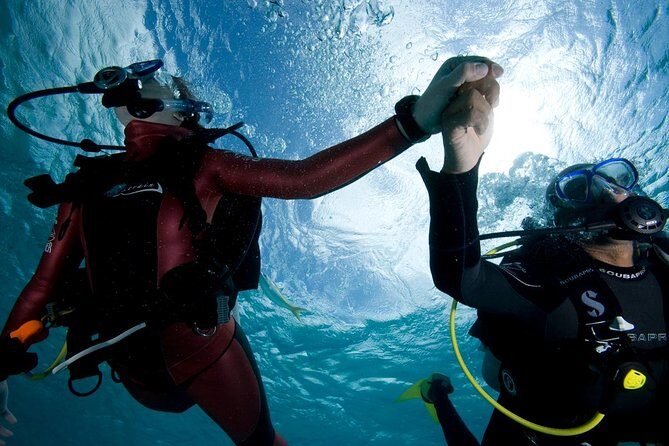
Once you’re comfortable with the basics, you head out for the underwater portion around the reef. Typically, there’s a boat transfer to the underwater spot, and then you descend with your instructor or a second support person close by.
Depth and time can vary with conditions and comfort level, but what I’ve seen described in first-time sessions often looks like a short bottom time around 8 to 11 meters, plus enough surface time to reset and come back feeling okay. The whole outing is short, which is another value point: it’s not an all-day endurance project. It’s an experience you can fit into a holiday without burning your whole schedule.
What you’ll notice underwater is not just fish. You’ll likely notice the movement of water, the slow pace of breathing, and how your body moves in three dimensions. That shift is why many people come back and try again.
On marine life, you might see:
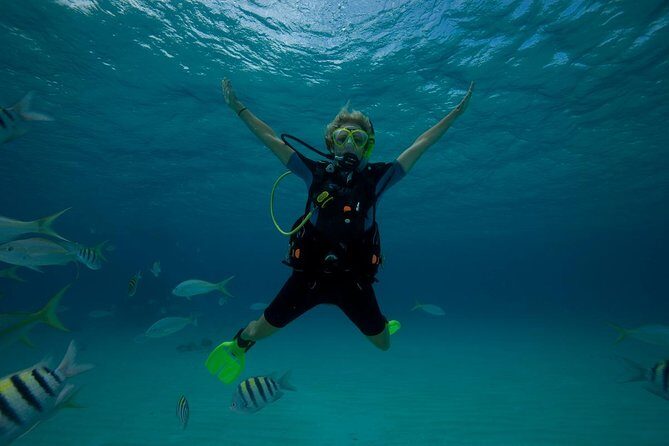
- schools of colorful reef fish
- crabs and sea anemones
- sea cucumbers
- baby barracudas in some areas
And sometimes, you get the wow moment. A large stingray sighting and a hidden sea horse story both show up in the range of what people report. You won’t be able to count on those animals, but you can reasonably expect plenty of reef activity for a first session.
Safety Feel: Small Groups, Close Coaching, and Constant Oversight
Safety isn’t a poster on the wall here. It’s built into how the session runs.
You’re not sent out on your own. The instructor stays on hand throughout, and you’re supported by another diver/assistant in the water for added control and help. That buddy-style support is especially comforting if you’re new and still figuring out how to signal, breathe, and keep your attention where it belongs.
The other safety layer is your medical screening. Before you go in, you’ll complete a health questionnaire. Some medical conditions—like asthma or heart conditions—may prevent you from diving, and the guidance is to consult your doctor if you’re unsure.
Also, there’s a flying rule: diving within 12 hours of flying isn’t recommended. If your travel plan is tight, you’ll want to schedule this session with extra buffer so you don’t get turned away for safety reasons.
If you’ve ever had even mild anxiety in water, you’ll probably appreciate the way instructors work through it. Multiple first-timers describe feeling safe because the team focused on calm breathing and step-by-step instruction rather than pushing them forward.
Other scuba diving tours in Gran Canaria
Price and What You’re Actually Paying For
At $108.89 per person for around two hours, you’re paying for three things:
1) a professional guide
2) all necessary equipment
3) an instructor-led progression from shallow skills to an outdoor reef swim
What’s not included is also clear: no food and drinks. No hotel pickup or drop-off. That means your real cost depends on what you do before and after the session.
Here’s how to think about value:
- If you’d otherwise rent gear and pay for guided instruction, this price can be a good shortcut.
- If you expect your hotel pickup, you’ll need to add transport costs yourself.
- If you get hungry after getting wet, plan a quick snack nearby. People also mention bringing water for after the session.
One more value detail: group size. With a maximum of 8 travelers, your experience is more likely to feel personal than assembly-line.
Location and Transport Reality: Las Palmas Address vs Southern Beaches
The meeting point is listed in Las Palmas, but the real-world experience can involve a beach location farther south. In one case, people described it as being about 30 miles away at Amadores Beach in Puerto de Mogán.
That doesn’t mean you’ll face a problem every time. It does mean you should not rely on guesswork.
Do this before you go:
- Confirm the exact beach location for your session day.
- If you’re using public transport or you’re arriving on a cruise, leave extra time to get where you’re supposed to be.
Because there’s no pickup, you’ll be responsible for getting there on schedule. And if you’re doing this as part of a tight itinerary, you want your transport nailed down early.
Timing That Can Vary: What the Two Hours Really Includes
The session is listed at about 2 hours, but timing can shift with weather and group flow. One caution that comes up for beginners: if schedules are tight, the shallow practice may feel rushed.
That’s not what most people want on their first attempt. Beginner sessions work best when you can go at your own pace for the breathing and control steps.
My advice:
- Show up early so you’re not losing calm minutes during check-in.
- Avoid stacking another time-sensitive activity right after the session.
- If you need more shallow practice, ask early and let the instructor know you’d like extra time with the breathing skills.
If conditions are poor, the experience can be rescheduled or refunded, so don’t plan it as your only option for a major day.
What to Bring (Besides Courage)
The big item is simple: remember your swimwear. After that, most needs are about comfort.
From real first-time experience tips, I’d also bring:
- clothing you don’t mind getting wet and changing over quickly (you may want to have a dry layer for after)
- water for after the session, especially if you’re walking around in the sun
You’re not responsible for the bulky parts of gear here. The equipment is included, and the team handles setup and fitting.
If you’re bringing a service animal, the experience allows service animals, so you’ll be fine if that’s relevant for your situation.
Who This Beginner Session Suits Best
This is aimed at true beginners, and the minimum age is 10 years old. Most people can participate, but your health questionnaire matters.
It’s a great match if:
- you want to try scuba in a short window without a full training program
- you get nervous and want patient guidance
- you like structured coaching rather than winging it in open water
- you prefer a smaller group (max 8)
It’s a poor match if:
- you’re within 12 hours of flying and you don’t have scheduling flexibility
- you have a medical condition that your questionnaire or doctor suggests is a no-go
- you cannot manage basic comfort underwater and need a slower progression than the day’s schedule allows
Also, English instruction is a plus for visitors who don’t want to translate safety signals. The session also has public transportation access, which helps if you’re not driving.
Should You Book This Beginner Session in Gran Canaria?
Book it if you want your first scuba experience to be practical, supervised, and confidence-first. The combination of shallow skills coaching, included gear, and close instructor attention is exactly what turns a scary idea into a memorable hour underwater.
Before you book, do two quick checks:
- Confirm the exact meeting point and whether your session is actually operating from a southern beach like Amadores Beach in Puerto de Mogán, especially if you’re staying in central Las Palmas.
- Keep your schedule flexible. If you’re planning it around a cruise or tight connections, build a buffer so timing surprises don’t spoil the day.
If you’re looking for a try-it-now session that could lead to more scuba training later, this is a strong pick. Just go in expecting learning—not perfection—and let the instructor guide your pace.
FAQ
How long is the beginner session?
It lasts about 2 hours (approx.).
What does it cost?
The price is $108.89 per person.
Is the session in English?
Yes, it’s offered in English.
Is equipment included?
Yes. All necessary equipment is included, and a professional guide/instructor is provided.
Do I need hotel pickup or drop-off?
No. There is no pick up or drop off service from hotels, and the activity ends back at the meeting point.
What’s the minimum age?
The minimum age is 10 years old.
Do I have to complete a health questionnaire?
Yes. All participants must complete a health questionnaire prior to diving, and some medical conditions (such as asthma or heart conditions) may prevent you from participating. If you’re unsure, check with your doctor.
Is it recommended if I just flew recently?
No. Diving within 12 hours of flying is not recommended.
How big is the group?
There’s a maximum of 8 travelers.
What happens if the weather isn’t good?
The experience requires good weather. If it’s canceled due to poor weather, you’ll be offered a different date or a full refund.