REVIEW · GRAN CANARIA
Agaete: Gran Canaria Coasteering. Marine Ferrata and Zipline
Book on GetYourGuide →Operated by RockNatour · Bookable on GetYourGuide
Gran Canaria has a coastline built for coasteering. This Agaete route strings together hiking, abseiling, climbing, optional jumps, and snorkeling, then adds geology talk along the way so the adventure feels grounded, not random. I love how the route uses ropes, harnesses, and tight safety systems so the day stays wild but controlled. The other thing I like is the mix: you spend time up high, then work your way down to the water for real ocean time.
The tour also includes a marine Via Ferrata where you climb above the sea, which is a huge change of pace from the abseil-to-coast vibe. You get a snack and a free photo report to help you relive the best moments later. The main drawback to factor in is that this is not a casual walk: the activity is not suitable if you fear heights or have back, mobility, or fitness limits.
If you want an active, skills-based day in northern Gran Canaria, this route is hard to beat. Expect a small group (up to 8) and an experienced guide who keeps things clear, supportive, and focused on safety.
In This Review
- Key highlights worth penciling in
- Agaete coasteering: what makes this day feel different
- Price and time: value for $79 and why 5 hours matters
- Where you start in Agaete: COMSILIENCE and the no-pickup reality
- The route from cliff to sea: step-by-step what you’ll do
- 1) Warm welcome, gear up, and a safety briefing
- 2) Hiking to a high point and an ancient aboriginal cave
- 3) From cliffside to abseiling: the controlled descent
- 4) Sea-level climbing and the chain pass
- 5) Optional jumps from about 12 meters
- 6) Snorkeling in a bay of north-coast cliffs
- 7) Back at COMSILIENCE with snacks and a last look
- Who this is best for (and who should skip it)
- Safety and guidance: the real engine of the experience
- What to bring (and what not to bring)
- The gear and included extras that make your day easier
- The best way to choose the right slot and manage expectations
- Should you book Agaete coasteering with marine Via Ferrata?
- FAQ
- How long is the coasteering tour in Agaete?
- How big is the group?
- What language is the guide?
- What’s included in the price?
- Do I need to bring snorkeling gear or a wetsuit?
- Is the tour safe for non-swimmers or people afraid of heights?
- Where do I meet and where does it end?
Key highlights worth penciling in
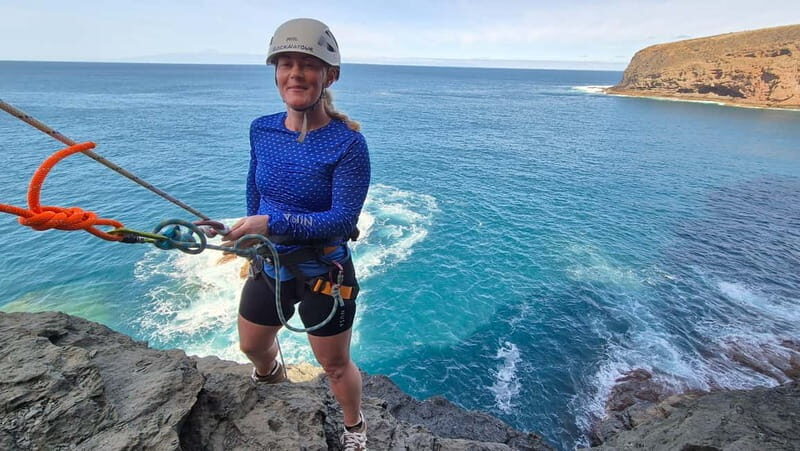
- Abseiling with ropes and the safest equipment you’re given for this kind of coastal line
- A complete coasteering route that mixes cliff hiking, coastal climbs, and ocean snorkeling
- Marine Via Ferrata in Agaete, with climbing sections positioned above the sea
- Snorkel in a bay by north-coast cliffs, finishing toward a wild beach stretch
- Optional jumps from 12 meters, for people who want that extra adrenaline hit
- A free photo report, plus a snack at the end to help you recover
Agaete coasteering: what makes this day feel different
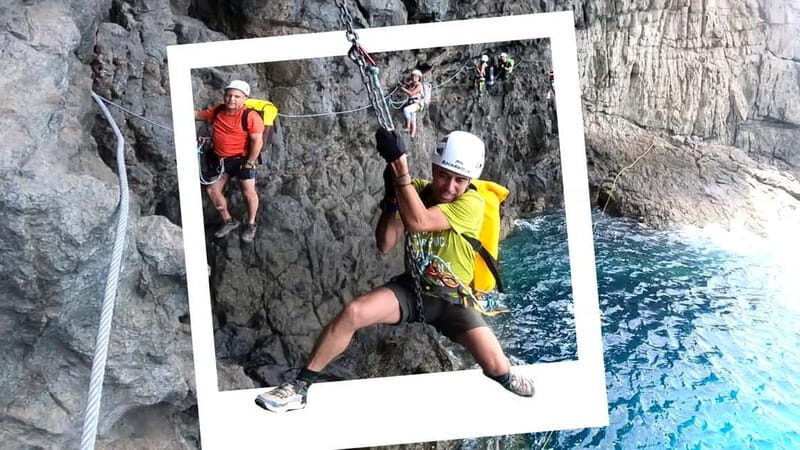
This isn’t just a one-move adrenaline activity. It’s a full route that moves between settings: cliff top, rock formations, sea-level routes, then water for snorkeling. That flow matters because it keeps you switched on. You’re not just thinking about one scary part the whole time. You get breaks in rhythm: hike, gear up, controlled descent, climb, then a quieter finish in the water.
I also like that the day is explained as a learning experience. You start with a hike toward an ancient aboriginal cave and you get local context about the island’s history and significance of the area. That turns the scenery into something you can actually talk about on the drive back to your hotel.
One more thing: you do your climbing and descent in a guided way with the right kit. You’re given a harness, helmet, and wetsuit, plus snorkel gear. The safety briefing is part of the experience, not a formality.
Other Gran Canaria tours we've reviewed in Gran Canaria
Price and time: value for $79 and why 5 hours matters
At $79 per person for about 5 hours, you’re paying for more than a guided walk. You’re paying for equipment (wetsuit, harness, helmet, snorkel kit), insurance, and a route that includes rope work, climbing, and optional jump points. In other words, it’s priced like an active day with specialist guidance, not like a basic excursion.
The timing is also useful. A 5-hour slot fits well into a Gran Canaria itinerary. You get enough time to feel you did something big, but you still have daylight left to eat, swim, or explore Agaete afterward. If you like full days but hate when they eat your whole vacation, this is a solid middle ground.
The small group size (limited to 8) is another value detail. You’re less likely to feel like a number, and guides can watch body positioning and technique more closely during rope and climbing sections.
Where you start in Agaete: COMSILIENCE and the no-pickup reality
The meeting point is at COMSILIENCE, in the parking close to the roundabout of Playa de Caleta in Agaete. The tour ends back at the same place, so you’re not hunting for a bus at the end with wet hair, sandy gear, and sore legs.
Hotel pickup is not included. That’s normal for adventure operators in this area, but it matters for planning. You’ll want to be able to get yourself to the meeting point on time. If your hotel is elsewhere on the island, leave extra buffer time because coastal traffic and parking can add stress.
The route from cliff to sea: step-by-step what you’ll do
1) Warm welcome, gear up, and a safety briefing
You begin with a warm welcome and the provision of all necessary equipment. Before anything technical, your guide runs through safety and how to move efficiently through the route. This matters for coasteering because you’re combining different skills: hiking on uneven terrain, then switching to controlled rope work and climbing near the sea.
You’re also outfitted with a harness and helmet, plus a wetsuit for comfort in the water sections. Snorkel kit is included, which is important because you’ll want the right fit once you hit the bay.

2) Hiking to a high point and an ancient aboriginal cave
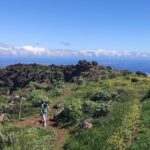
The first active stage is a hike along the cliff. You move toward a higher point where you can discover an ancient aboriginal cave. Along the way, your guide shares insights into the history and significance of the area and helps you connect volcanic-era geography to what you see today.
This part is not just scenery. It also sets you up physically. You’ll warm up and get your balance working before the rope section starts.
3) From cliffside to abseiling: the controlled descent
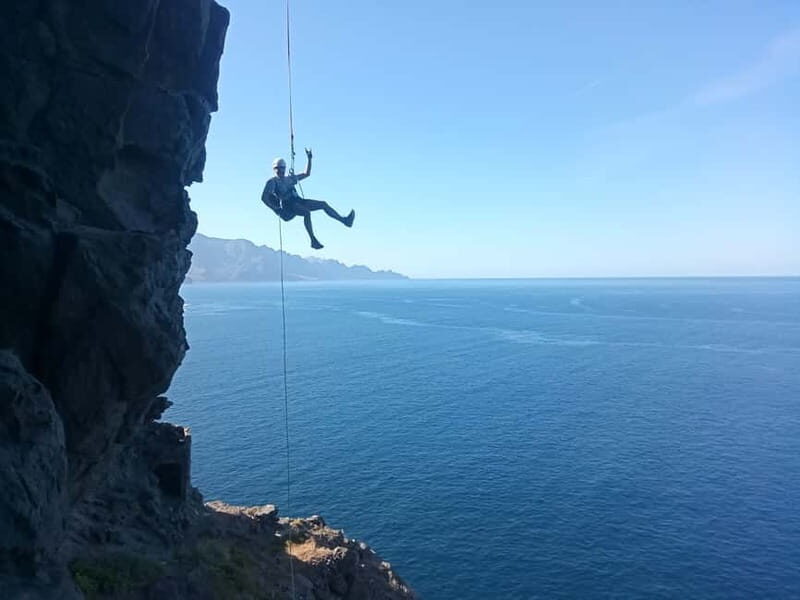
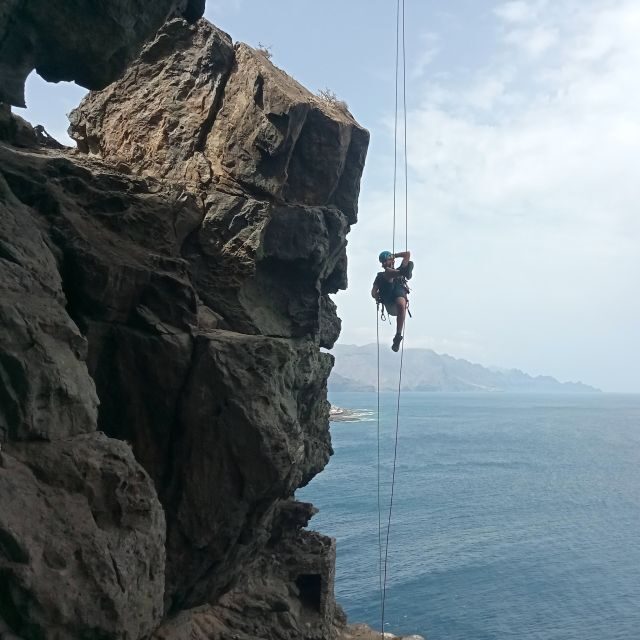
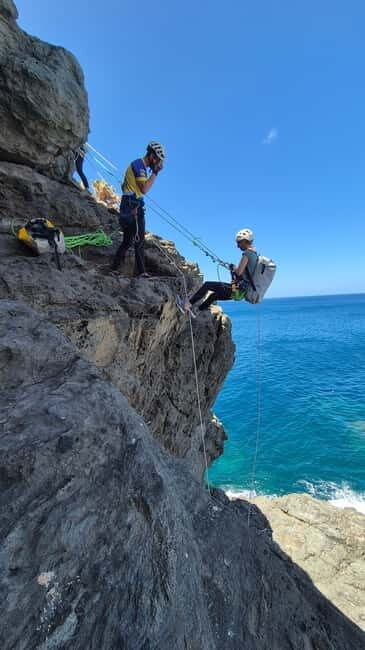
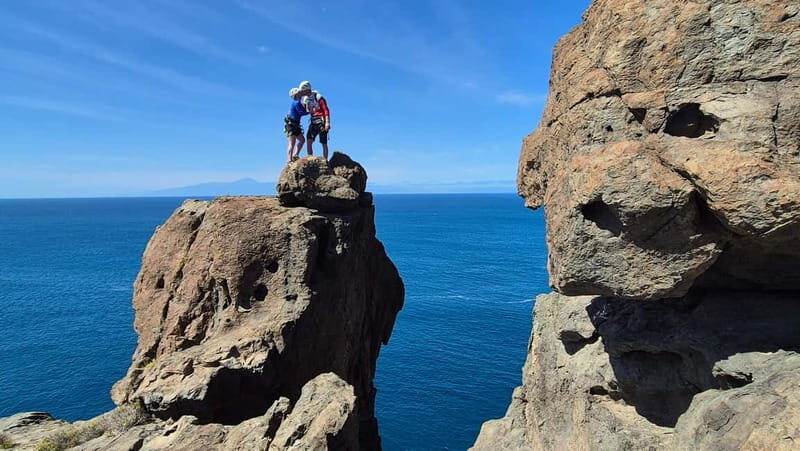
Next you reach the top of a striking rock formation with panoramic views of Agaete and a hidden beach. Then comes the abseiling down to the coastline.
Abseiling can be intimidating even if you’re not afraid of heights. The best part here is that you’re doing it with ropes and the safest equipment you’re given for the day. Your guide’s job is to help you move slowly, stay clipped in, and keep good body position so the whole descent feels deliberate rather than chaotic.
Practical note: your wetsuit and clothing matter here. The tour notes tight clothes are okay because you’ll store items in dry bags, but you should avoid shorts that can scratch on rocks.
4) Sea-level climbing and the chain pass
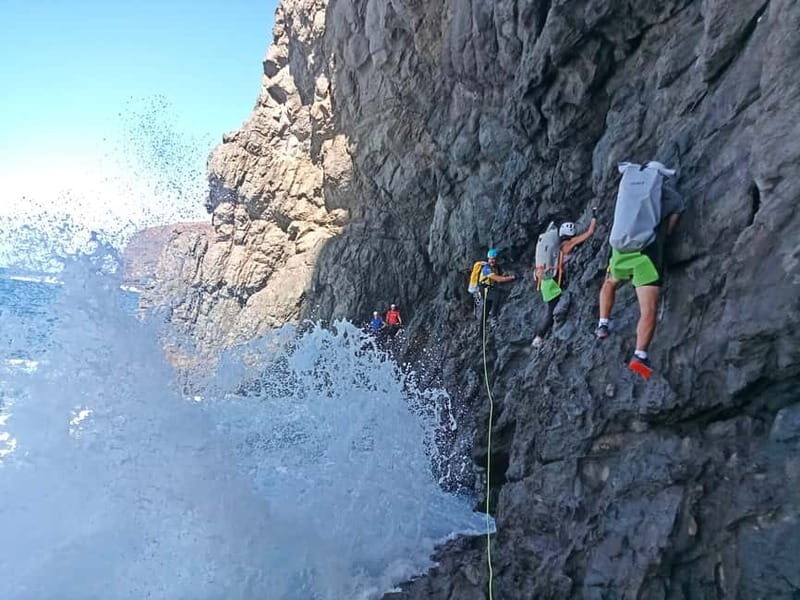
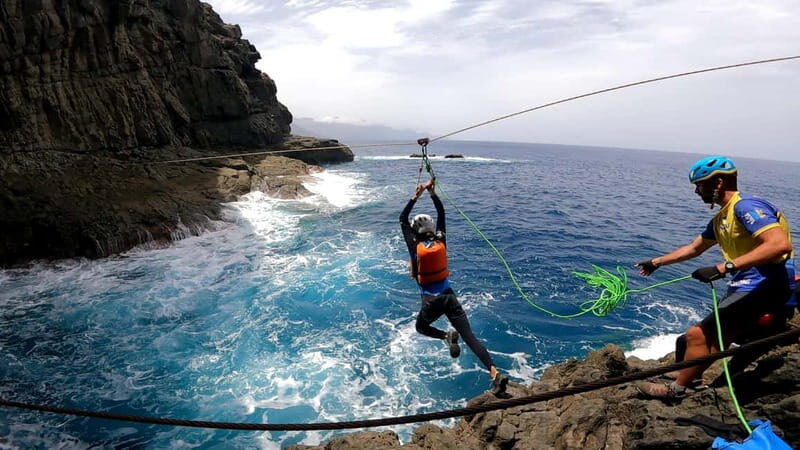
Once you’re at coastal level, the adventure continues along a climbing route over the sea. There’s a specific highlight called the chain pass, which adds that extra tactile sense of secure progression.
This is where good footwear matters most. You’re moving across rock surfaces and relying on technique rather than speed. Keep your focus on where your feet land and listen carefully to how the guide wants you to handle the next hold.
5) Optional jumps from about 12 meters
If you like jumping into the water, you’ll find a scenic spot with jumps from around 12 meters. The key word here is optional. Even if you’re an adrenaline person, you’ll still want to treat the jump section with respect and follow the guide’s cues on timing and entry.
This is also where comfort in the water matters. The tour is not suitable for non-swimmers, so the jump is not a beginner-friendly attraction. If you’re on the fence, you can still enjoy the rest of the route while staying within your limits.
6) Snorkeling in a bay of north-coast cliffs
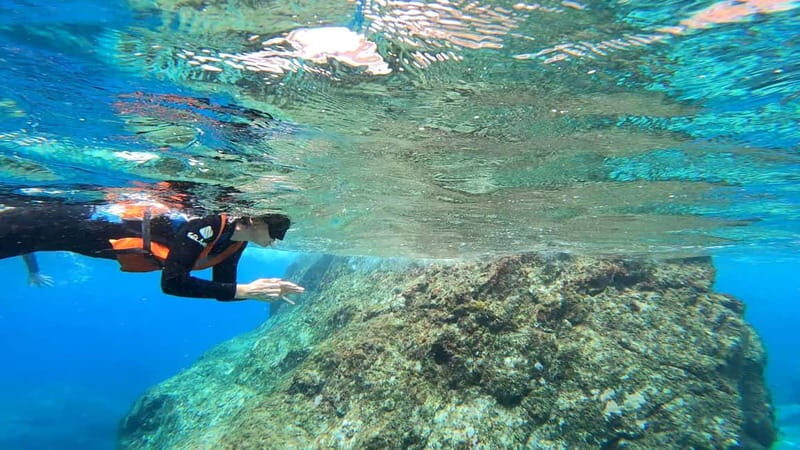
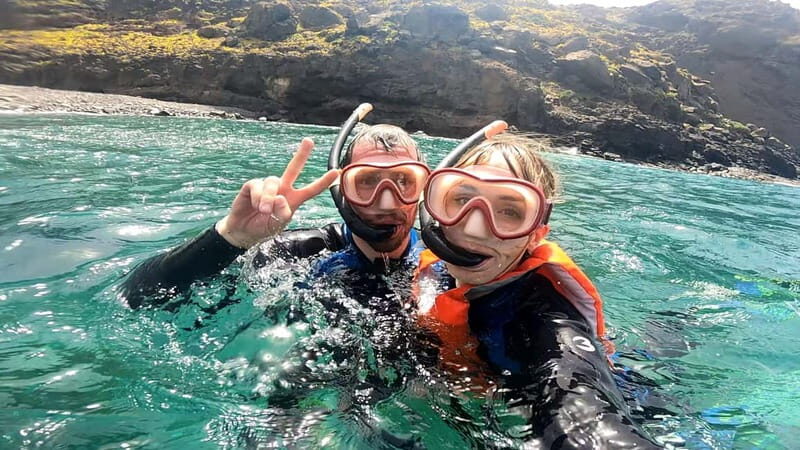
After the ocean-route climbing and (optional) jump section, you finish with snorkel time in a beautiful bay surrounded by majestic cliffs of the north until you reach a wild beach area.
Snorkeling is a great contrast to the earlier intensity. It gives your body a breather while still letting you see the underwater side of the island. This part is included for a reason: it’s not just a rest break. It’s part of the full Gran Canaria story—rock, sea, and volcanic edges meeting in one place.
7) Back at COMSILIENCE with snacks and a last look
The tour ends back at the meeting point where you can relax and enjoy snacks while taking in the views of the entire route from above. That last look is surprisingly satisfying. You get to connect what you just did with the bigger geography again.
Who this is best for (and who should skip it)
This is a serious adventure day. It’s not suitable for children under 16, pregnant women, people with back problems, anyone with mobility impairments, or people with low level of fitness. It’s also not for non-swimmers.
The really clear warnings are about fear and comfort:
- Not suitable for people afraid of heights
- Not suitable for people with vertigo
If you have even a mild hesitation around heights, be honest with yourself. Rope work and cliff sections will test you, even with a supportive guide.
On the other hand, if you’re fit enough to hike and you want a day that combines skills, sea time, and real outdoor mechanics, you’ll likely love the challenge. The tour’s effort is described by participants as medium overall, but it feels more intense because of the adrenaline. That lines up with the mix of rope, climbing, and jump options.
Safety and guidance: the real engine of the experience
The tour is led by an instructor/guide who speaks English and Spanish. The experience includes insurance and safety gear, and you get a safety briefing at the start.
In the feedback, the guide named Pablo comes up again and again. People describe him as informative, supportive, funny, and professional. That kind of coaching matters during abseiling and climbing because your brain needs clear steps, not vague encouragement. You also want someone patient enough to keep you calm while you focus on technique.
So if you’re nervous, here’s the good news: the structure of the day is built around instruction. You’re not just thrown into the deep end with gear and silence.
What to bring (and what not to bring)
Bring:
- Swimwear
- Towel
- Sunscreen
- Water
- Breathable clothing
- Sports shoes or hiking boots
- Sportswear
Wear:
- Hiking boots or sports shoes
- Sports clothes (and breathable layers)
- A jacket could be necessary
Avoid:
- Don’t bring shorts. The tour notes you could scratch with rocks.
One more planning tip: expect to get wet and sandy. If you’re carrying a phone, use the dry-bag plan and keep valuables protected. The route includes several water moments and sea-level climbing where things can splash.
The gear and included extras that make your day easier
You’ll have:
- Harness
- Helmet
- Wetsuit
- Snorkel kit
- Insurance
- Professional guide
- Snack
- Pictures (free photo report)
The photo report is a nice touch. A day like this is hard to fully experience through your lens. Getting professional photos helps you relive the most dramatic angles later without trying to juggle a camera while wearing a harness.
The best way to choose the right slot and manage expectations
This tour runs with starting times, and duration is listed as 5 hours. Check availability to find a slot that fits your day. Earlier starts can help if the island is warming up fast, but the bigger point is matching the route to your energy level.
Also manage expectations about difficulty. The route has ups and downs, rope work, climbing, and water. If you’re expecting a laid-back beach afternoon, you’ll be disappointed. If you want a hands-on adventure and don’t mind a physical workout, the day is built to deliver.
Should you book Agaete coasteering with marine Via Ferrata?
Book it if you:
- Want a full coasteering route with climbing, abseiling, snorkeling, and optional jumps
- Like guided technical activities more than just sightseeing
- Are comfortable with heights in the active, controlled sense (or at least can follow instructions calmly)
- Want a small-group day (max 8) with safety gear included
Skip it if you:
- Fear heights or have vertigo
- Are not a confident swimmer
- Have back problems, mobility limitations, or prefer low-effort days
- Are under 16, pregnant, or traveling with someone who doesn’t meet the clearly stated restrictions
If you’re on the fence, ask yourself one question: do you want to earn your ocean views with rope work and climbing? If yes, this is a great Gran Canaria day in Agaete, with equipment, instruction, and a finish that lets you switch gears from adrenaline to calm sea time.
FAQ
How long is the coasteering tour in Agaete?
The tour duration is listed as 5 hours, and starting times vary by availability.
How big is the group?
The group is small, limited to 8 participants.
What language is the guide?
The instructor/guide speaks English and Spanish.
What’s included in the price?
Included items are a professional guide, insurance, harness, helmet, wetsuit, snorkel kit, snack, and pictures (free photo report).
Do I need to bring snorkeling gear or a wetsuit?
No. A wetsuit and snorkel kit are provided, along with the harness and helmet for the technical parts.
Is the tour safe for non-swimmers or people afraid of heights?
No. The tour is not suitable for non-swimmers, and it is also not suitable for people afraid of heights or with vertigo.
Where do I meet and where does it end?
You meet at the parking close to the roundabout of Playa de Caleta (Agaete) at COMSILIENCE, and the tour ends back at the same meeting point.