REVIEW · GRAN CANARIA
PADI Rescue Diver Course in Gran Canaria
Book on Viator →Operated by Blue Water Diving · Bookable on Viator
Rescue skills start with calm hands. This two-day PADI Rescue Diver course on Gran Canaria gives you structured training for real-life moments—what to do when someone is panicking, unresponsive, or not breathing right.
I like the small group size (max 6), which means you get more turns at practicing instead of watching from the sidelines. I also love how the course mixes theory plus hands-on scenarios across day 1 and day 2 at Amadores.
One drawback to plan for: this course assumes you’re already certified. You’ll need proof of your PADI Open Water certification, and you’ll also complete a health questionnaire before any water work.
In This Review
- Key things to know before you go
- Why Gran Canaria fits a PADI Rescue Diver course near Amadores
- Course fit: you must already be PADI Open Water certified
- Day 1 plan: skills shown in Amadores bay or an onsite pool
- Day 2 at Amadores Beach: two rescue scenarios on the clock
- What you learn: self-rescue plus rescue responses that work
- Blue Water’s teaching style: clear, professional, and personal
- Price and value: what your $397.58 actually buys
- Getting there without chaos: meeting point and timing
- Safety and health checks you should take seriously
- Should you book the PADI Rescue Diver course in Gran Canaria?
- FAQ
- Do I need prior certification to join the PADI Rescue Diver course?
- How long is the PADI Rescue Diver course in Gran Canaria?
- Where does the training happen on each day?
- What skills will I practice during the course?
- What’s included in the price?
- What is not included?
- Where do I meet, and what time does it start?
- Is there a health or flying requirement?
- What if I need to cancel?
Key things to know before you go
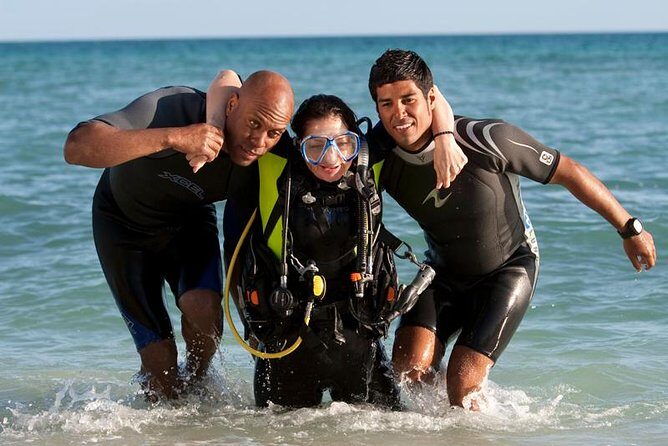
- Two-day format with real scenarios: day 1 in a bay or onsite pool, day 2 at Amadores Beach with rescue scenario practice.
- Focused on self-rescue and rescue responses: underwater and surface skills for unresponsive or unconscious situations.
- Small max group: up to 6 travelers, so coaching stays personal.
- Pickup helps, but it’s selected hotels only: otherwise you meet at Euronet ATMManixa.
- Price includes course essentials: guide, PADI materials, certification fees, and insurance are built in.
- Food and drinks aren’t included: you’ll want to plan your own fuel between sessions.
Why Gran Canaria fits a PADI Rescue Diver course near Amadores
Gran Canaria has a nice advantage for training: you can get a mix of easy-to-manage coastal settings, without having to travel far across the island. This course is based on the west coast beaches, with Amadores as the main stage on day 2.
That matters because a rescue course is not about show-and-tell. It’s about muscle memory. When you repeat the same steps in a controlled way, you get faster at the right actions under pressure. And when you can focus on the skills instead of fighting complicated conditions, learning sticks.
Other Gran Canaria tours we've reviewed in Gran Canaria

Course fit: you must already be PADI Open Water certified
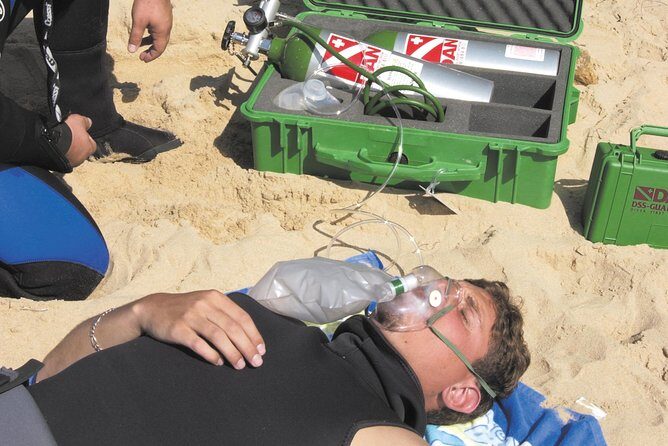
This is not for brand-new divers. The requirement is clear: you need PADI Open Water certification, and you’ll have to show proof to join.
There’s also a fitness and safety reality check. You should have moderate physical fitness, and you’ll complete a health questionnaire before diving. If you have pre-existing conditions (examples listed include asthma and heart conditions), you should talk to your doctor first.
If you’re coming straight from Open Water and you want to build confidence fast, this course is a practical next step. If you’re not sure you’ll feel comfortable doing rescue-style drills, do yourself a favor and be honest about how your buoyancy and comfort are right now.
Day 1 plan: skills shown in Amadores bay or an onsite pool
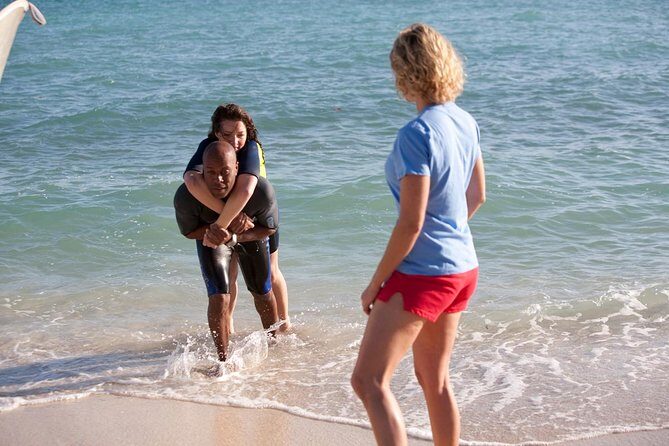
Day 1 is where the basics get framed and then practiced. According to the plan, the instructors show skills either in the local bay of Amadores or in an onsite pool.
That flexibility can be helpful. A pool day usually gives you calmer, more predictable conditions for technique. A bay day can help you transition sooner to natural water and real spacing. Either way, the goal is the same: you learn the framework of self-rescue and how emergency responses should look and feel.
You’ll go through training that covers:
- Self-rescue techniques (how to manage your own situation first)
- What to do when there’s an unresponsive or unconscious diver
- The difference between reacting fast and panicking
I like this approach for one big reason: rescue thinking starts before you reach someone else. You learn to keep your head, control your breathing, and make your next action simpler.
Day 2 at Amadores Beach: two rescue scenarios on the clock
Day 2 moves to Amadores Beach and focuses on putting it all together. You’ll complete two rescue scenarios, and that’s where the course earns its name.
Scenario training is different from learning steps alone. You’re working through a sequence while your brain tries to do three jobs at once:
1) recognize what’s wrong,
2) manage your own safety,
3) respond in a way that actually helps.
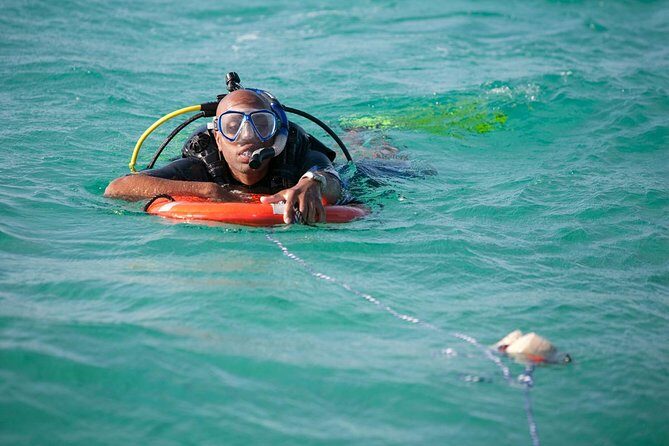
The course is built around rescue responses for situations involving an unresponsive/unconscious diver, both underwater and on the surface. You’ll practice actions that help you get control, bring the emergency under control, and move the rescue forward instead of freezing.
This kind of repetition is exactly what you want from a rescue course. It’s not theoretical heroics. It’s learning how to make smart calls and execute them calmly.
What you learn: self-rescue plus rescue responses that work
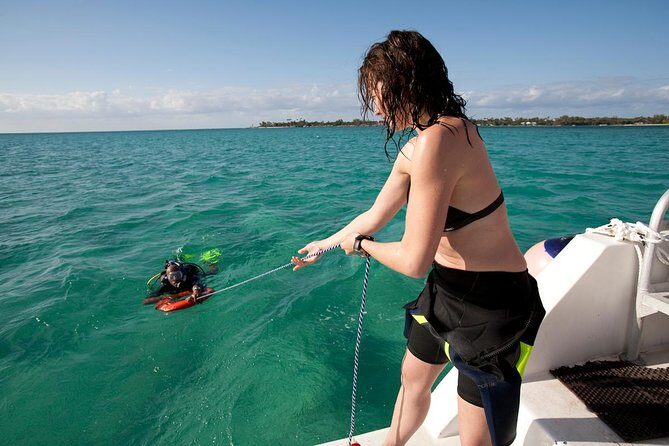
At its core, the PADI Rescue Diver course is about reducing the chaos. You learn how to react when things go sideways, instead of waiting until panic takes over.
Here’s what you can expect in terms of training focus:
- Self-rescue skills: first steps to stabilize yourself so you’re not adding another emergency
- Rescue procedures: how to handle a diver who’s unresponsive or unconscious
- Underwater and surface actions: the course explicitly trains both sides of the response, not only one
- Emergency thinking: learning what to do in sequence—because in real emergencies, order matters
If you’re already an Open Water certified diver, you’ll appreciate that this course doesn’t ignore reality. It takes common failure points—stress, confusion, poor breathing, and bad decision-making—and trains you with clear steps.




Blue Water’s teaching style: clear, professional, and personal
The biggest reason people keep returning to this kind of training center is consistency in instruction. In the past experiences shared around this team, names like Chris and Kate come up a lot, and the pattern is what you’d hope for: clear teaching, friendly communication, and safety treated like a top priority.
Chris, specifically, is mentioned as an instructor who teaches the required material in a way that feels both professional and friendly. That’s important. A rescue course can feel intense. If instructions are unclear, you’ll waste time trying to figure out what the instructor wants instead of practicing the rescue process.
Kate shows up as the person supporting logistics and coordination. When you’re dealing with health questionnaires, certification checks, and schedules, good communication helps you arrive feeling ready, not stressed.
I also like that this training is paired with an experienced team culture. Even if you’re only doing this course, it’s comforting to see the center’s standards hold across different programs and skill levels.
Price and value: what your $397.58 actually buys
At $397.58 per person for an approximate two-day course, this pricing makes more sense when you look at what’s included.
Included in the price:
- A professional guide
- Hotel pickup and drop-off (selected hotels only)
- PADI materials and certification fees
- Insurance
Not included:
- Food and drinks
So you’re not just paying for time in the water. You’re paying for the instruction framework, the required course paperwork and materials, and the insurance coverage connected to the course.
That tends to be better value than piecing everything together yourself. The cost isn’t only about rentals or instructors—it’s about the full rescue training package.
The only real cost surprise is meals. Since food and drinks aren’t included, plan for lunch or snacks between sessions. Day 1 and day 2 are both training-heavy, so you’ll feel the difference if you’re underfed.
Getting there without chaos: meeting point and timing
You start at 9:00 am. The meeting point is listed as Euronet ATMManixa, C. Doreste y Molina, 18, 35130 Puerto Rico, Las Palmas, Spain. The activity ends back at the meeting point.
A few logistics details that make this easier:
- Near public transportation
- You’ll receive a mobile ticket
- Pickup exists, but only for selected hotels, so don’t assume it’s automatic
If your hotel is outside the pickup zone, build time to reach the meeting point early. Rescue courses move quickly because you’re not just learning—you’re practicing.
Safety and health checks you should take seriously
Before any water work, you’ll be required to complete a health questionnaire. Some conditions can prevent you from diving, and the course data specifically points to examples like asthma and heart conditions.
There’s also a flying note that’s worth respecting: diving within 48 hours of flying is not recommended. That’s the kind of rule you don’t want to ignore, even if you feel fine on day one.
I appreciate that the course sets these expectations upfront. It helps you plan your travel so your body is ready, not playing catch-up.
Should you book the PADI Rescue Diver course in Gran Canaria?
Book it if:
- You’re already PADI Open Water certified
- You want practical emergency skills for self-rescue and for dealing with an unresponsive/unconscious diver
- You like training in a small group (max 6), where you can practice often
- You value a package that includes materials, certification fees, and insurance
Skip it or think twice if:
- You’re not ready to meet the certification proof and health questionnaire requirements
- You expect a laid-back beach day. This is skill practice with scenarios, not sightseeing-only time
- Meals matter to your budget, since food and drinks aren’t included
For many divers, this course is one of the fastest ways to level up confidence. Not confidence like a pep talk—confidence that comes from rehearsing the steps when it matters.
FAQ
Do I need prior certification to join the PADI Rescue Diver course?
Yes. You must provide evidence that you already hold PADI Open Water certification to participate in this certified dive course.
How long is the PADI Rescue Diver course in Gran Canaria?
It’s scheduled for 2 days (approx.). You’ll complete theory and practical training across both days.
Where does the training happen on each day?
Day 1 happens either in the local bay of Amadores or in an onsite pool. Day 2 takes place at Amadores Beach for two rescue scenarios.
What skills will I practice during the course?
You’ll learn self-rescue techniques and how to respond to an unresponsive or unconscious diver, both underwater and on the surface, using emergency and rescue procedures taught by the instructor.
What’s included in the price?
The included items are a professional guide, hotel pickup/drop-off for selected hotels, PADI materials and certification fees, and insurance.
What is not included?
Food and drinks are not included.
Where do I meet, and what time does it start?
You meet at Euronet ATMManixa, C. Doreste y Molina, 18, 35130 Puerto Rico, Las Palmas, Spain at 9:00 am. The experience ends back at the meeting point.
Is there a health or flying requirement?
Yes. You’ll complete a health questionnaire prior to diving, and some medical conditions may prevent you from diving. Also, diving within 48 hours of flying is not recommended.
What if I need to cancel?
Cancellation is free if you cancel up to 24 hours in advance of the experience start time for a full refund. If you cancel less than 24 hours before, there’s no refund.