REVIEW · LAS PALMAS
Gran Canaria : Vía Ferrata “Amor & Odio” – Medium level
Book on GetYourGuide →Operated by UMIAGA experience · Bookable on GetYourGuide
Cables, sea air, and a big confidence boost. This medium-level via ferrata, Amor y Odio, lets you climb a protected route with fixed cables and safety gear while enjoying sea views. I really like the safety-first setup and the way the route gives you options for harder or easier lines. The one consideration: it is still an active mountain day, so if you struggle with heights or stamina, the approach walk and time on the wall can feel like a lot.
What makes it extra worth your time is the pace and feel. You go in a small group (up to 9), with guides who can talk you through the route and the local environment in Italian, English, and Spanish—and the whole thing runs about 4 hours from start to finish.
In This Review
- Key highlights you’ll feel fast
- Via Ferrata Amor y Odio: what you’re actually signing up for
- Where the day starts: meeting point and the approach walk
- Entering the route: fixed cables, safety gear, and real options
- The middle of the climb: monkey bridge energy
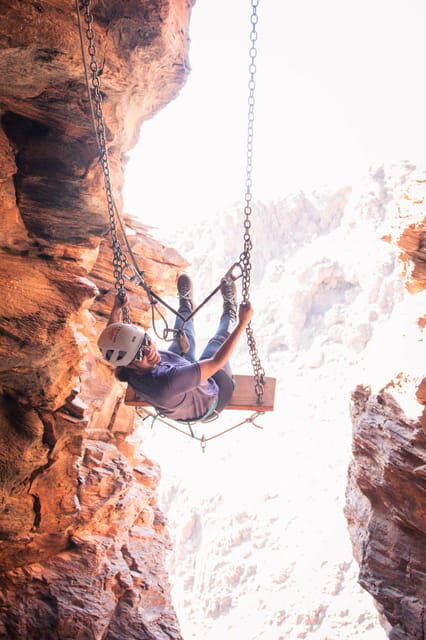
- The swing moment: views plus a little adrenaline tax
- Finishing the via ferrata and heading back down
- What’s included (and why it changes the value)
- The guides: communication you’ll actually use on the wall
- What to wear and bring: keep it simple, keep it safe
- Who this via ferrata is for (and who should skip it)
- Price and logistics: is $82 worth it
- Should you book this Amor y Odio via ferrata?
- FAQ
- How long is the Gran Canaria Via Ferrata Amor y Odio experience?
- Where is the meeting point?
- What level is this via ferrata?
- Are the guides included, and what languages do they speak?
- Is the activity safety-focused, and is insurance included?
- What’s included in the price besides the climb itself?
- What should I bring?
- Is it suitable for children?
Key highlights you’ll feel fast
- Sea-view sections keep your eyes up and your nerves calmer.
- Medium difficulty with route choices helps you match the climb to your comfort level.
- Monkey Bridge adds a fun, memorable mental check.
- A swing near the views turns the climb into something you’ll talk about later.
- High-quality materials + qualified guides make the safety side feel taken care of.
- Professional photo report means you get the day documented without risking your phone on cables.
Via Ferrata Amor y Odio: what you’re actually signing up for
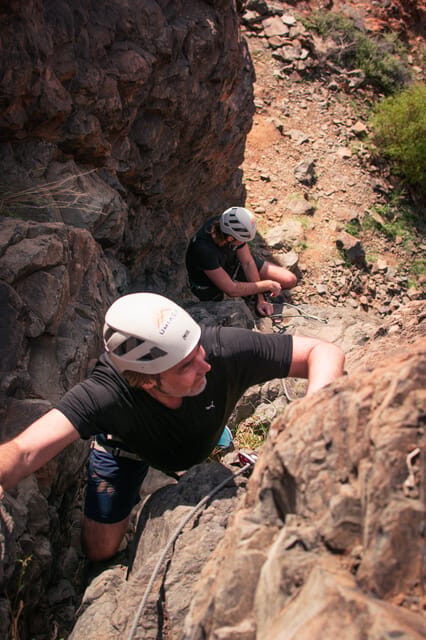
A via ferrata is basically a mountain climbing route that’s been made safer for normal humans. You follow a fixed system—cables, ladders, bridges, and other anchoring points—so you’re not free-climbing with no protection. The term “iron path” comes from the Italian idea of guiding people along a prepared route.
For this one, the difficulty is listed as medium. That matters, because medium doesn’t mean either trivial or terrifying. It’s the sweet spot for people who want a real challenge but aren’t brand-new to heights or basic climbing movement. It’s also for people who have done via ferrata before and want a route that still has good payoffs.
And yes, the views are part of the point. You get sea views from the climb, so you’re not just focused on the next foothold. That shift—up to the horizon instead of down at your hands—can make a big difference on an “intense emotions” day.
If you're still narrowing it down, here are other tours in Las Palmas we've reviewed.

Where the day starts: meeting point and the approach walk
You’ll meet near the parking area just behind the Bahia Feliz bus stop. This is good news if you’re traveling around the south/east side of Gran Canaria by bus or taxi first. You don’t need to solve a complicated logistics puzzle to get to the trailhead.
From there, expect a walking approach of around 30 minutes to reach the start of the via ferrata. That time is more than just walking. It’s your warm-up and your chance to get your head right before the cables show up.
Practical tip: wear your closed-toe shoes and plan for long pants. Even if you feel fine at the parking lot, the approach plus gear changes how your body works. Your legs and grip will get a workout later, so arrive ready to move.
Entering the route: fixed cables, safety gear, and real options
Once you reach the entrance, the climbing begins on a protected line. You’ll be using the via ferrata system with specific safety materials, provided as part of the experience, along with qualified guides. The operator also lists RC and ACC insurance, which adds peace of mind when you’re paying attention to the safety side (and you should).
Here’s the key value of this via ferrata: depending on your level and your group, you can choose different paths that change the difficulty. That means you’re not stuck doing only one type of movement for the entire route. If you want a more manageable line, you can aim for that. If you feel strong and comfortable, you can take the tougher version.
That flexibility is huge for mixed groups. You’re sharing the day with others, but you’re not forcing every person into the same exact version of the climb.
The middle of the climb: monkey bridge energy
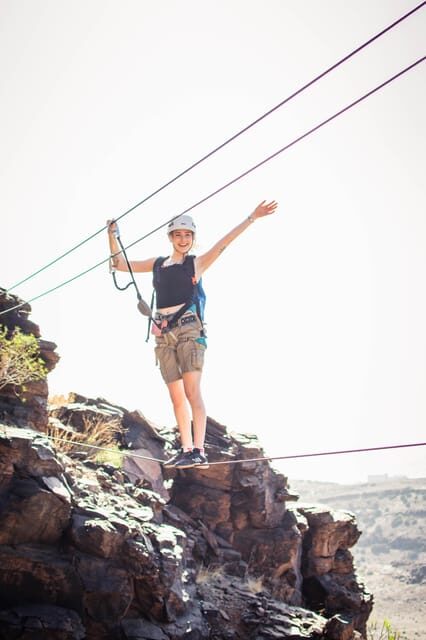
At about the middle of the route, you’ll hit a signature feature: a Monkey Bridge. This is the kind of obstacle that looks simple until you’re on it and your body realizes you’re balancing while trusting a safety system.
What I like about bridges in via ferrata routes is the mental reset they create. You focus on one crossing, then you move on. It breaks the day into segments, so the climb doesn’t feel like one long grind.
If heights get to you, don’t fight the fear with drama. Use the guide’s cues, keep your eyes on the next handhold or cable, and treat it like a controlled transition. The point is to keep moving.
The swing moment: views plus a little adrenaline tax
Further ahead you’ll find a swing. This is a classic via ferrata style move: not just vertical climbing, but a moment where your body feels suspended and you have to manage balance and timing.
And because it’s positioned with strong sea views, it turns into more than an obstacle. You get the reward feeling—where your brain finally goes quiet and says, OK, I’m doing this.
One caution: swings and bridges are where people sometimes rush. Don’t rush. Follow the guide’s instructions, keep your posture stable, and let your confidence catch up with your feet.
Finishing the via ferrata and heading back down
After the climbing portion ends, you don’t just vanish into the mountain. You’ll do the return path back to the starting parking area, with a walk of about 30 minutes.
This is the part where you’ll feel your day total up. Your legs may be tired from the holds and friction, and your shoulders may feel the effect of tightening and adjusting on the cables. The good news: it’s not another technical phase. You’re just walking back.
I recommend you treat the return as part of the experience, not an afterthought. If you get complacent, you can trip over uneven ground when you’re tired. Comfortable shoes matter here again.
What’s included (and why it changes the value)
This one is priced at $82 per person for a 4-hour activity, and what you get matters more than the number.
Included items:
- Services and materials for the activity
- All specific climbing/safety material
- Qualified guides
- RC and ACC insurance
- Professional photographic report with high-quality images
- Energy bar
- Individual bottle of water
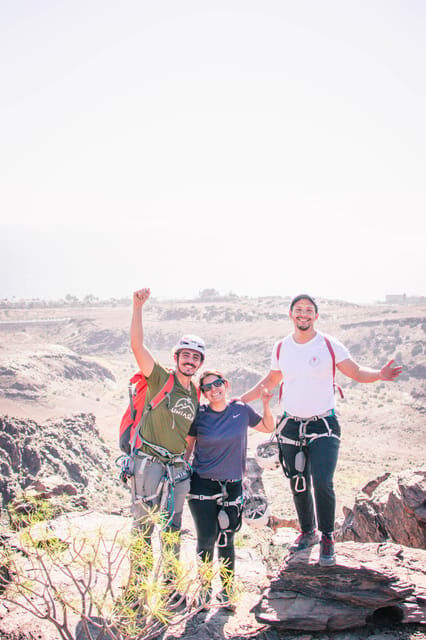
That photo report is a sneaky value booster. If you’ve ever tried to take pictures while attached to a safety line, you know how pointless that can get. Here, you get the moment captured without risking safety or fiddling with gear.
The energy bar and water also help you stay steady. You’re not forced to hunt for snacks mid-climb. It’s a small thing, but it makes the day feel supported.
And the safety elements—materials, qualified guides, insurance—are not extras. They’re the product.
The guides: communication you’ll actually use on the wall
The guides are listed as Italian, English, Spanish. That’s practical. You can ask questions in the language you’re most comfortable with, especially when you’re learning technique like how to move with the system on.
One detail that stands out from the guide feedback: Aron is mentioned in multiple positive experiences as both very good at the climbing side and knowledgeable about the territory, local history, and nature. Even if you don’t care about every historical fact, you’ll feel the difference when your guide explains what you’re seeing and why it matters. It keeps you engaged, and it makes pauses feel useful.
Small group size helps too. When you’re not fighting for attention, you get corrected faster and you can settle into the route with less uncertainty.
What to wear and bring: keep it simple, keep it safe
You’re given the safety materials, but you’re responsible for your body and clothing choices. Bring:
- Comfortable shoes
- Long pants
- A daypack
- Sunscreen
- Water and a reusable water bottle
- Drinks you like (the list says drinks)
- Comfortable clothes
Also, stick to the basic rules:
- No weapons or sharp objects
- No smoking
- No drones
- No alcohol or drugs
- No littering
- No bare feet
Practical tip: choose shoes with grip. Via ferrata routes often include mixed surfaces. If your soles feel too soft, you’ll waste energy on tiny slips.
And pack water even if you’ll receive a bottle. For a 4-hour outdoor climb in the Canaries, hydration is smart. You’ll feel it when you’re tired on the return walk.
Who this via ferrata is for (and who should skip it)
This is not a casual stroll. It’s meant for people who can handle heights and movement on a secured climbing route.
It’s specifically noted as not suitable for:
- Children under 14
- People with back problems
- People with mobility impairments and wheelchair users
- People with vertigo
- People with heart problems
- People with respiratory issues
- People with epilepsy
- People under minimum height or under/over weight thresholds (the activity lists limits)
- People with pre-existing medical conditions, recent surgeries, or low fitness
- People with motion sickness
- Hearing-impaired people
- People over 80 years (and other upper age limits are listed)
So if you’re on the fence, be honest with yourself. Medium via ferrata still means you’re attached, moving overhead or across obstacles. If vertigo is a yes, this should be a no.
Price and logistics: is $82 worth it
At $82 per person for about 4 hours, the price only makes sense if the included stuff is real—and here, it is.
You’re not just paying for access to cables. You’re paying for:
- guides (and group control),
- all the specific material,
- insurance coverage,
- a professional photo report,
- and the basics like energy bar and water.
That means you show up ready to climb instead of spending time renting equipment, figuring out safety instructions, or trying to capture your own photos. For most visitors, that saves both money and mental load.
If you were to rent a full set of gear and hire instruction, the economics usually get worse fast. This format keeps the day streamlined.
Should you book this Amor y Odio via ferrata?
If you want an active Gran Canaria experience with strong payoff—sea views, real obstacles like the Monkey Bridge, and a swing moment—this is a very solid pick. The medium level and the route choice options make it a good match when you want challenge without jumping straight to the hardest grade.
Book it if:
- you’re comfortable with heights and using safety equipment,
- you have a decent baseline fitness for an approach plus return walk,
- you like guided days with small group attention,
- and you want photos taken for you.
Skip it if:
- vertigo or height anxiety is a major issue,
- you have relevant medical constraints listed by the activity,
- or your fitness is low enough that “30 minutes walking in” and “30 minutes walking out” feels like a strain.
If that sounds like you’re in the sweet spot, go for it. This is the kind of climb where you leave tired, a bit proud, and with photos that prove you did more than just sightseeing.
FAQ
How long is the Gran Canaria Via Ferrata Amor y Odio experience?
The duration is about 4 hours.
Where is the meeting point?
You’ll park just behind the Bahia Feliz bus stop.
What level is this via ferrata?
It’s listed as a medium difficulty via ferrata, suitable for beginners wanting to start and for people who have already started via ferrata.
Are the guides included, and what languages do they speak?
Qualified guides are included, and the guides speak Italian, English, and Spanish.
Is the activity safety-focused, and is insurance included?
Yes. Safety is stated as included in the activity, and RC and ACC insurance are included as well.
What’s included in the price besides the climb itself?
Included are the services and materials, the specific safety/climbing material, the photo report with high-quality images, an energy bar, and an individual bottle of water.
What should I bring?
Bring comfortable shoes, comfortable clothes, long pants, sunscreen, drinks, water, and a daypack, plus a reusable water bottle.
Is it suitable for children?
It’s not suitable for children under 14, and it also lists additional height/weight limits.